

SAS Window Cleaning · Dartington
Exterior Cleaning & Pressure Washing in Dartington
- ✦ 30+ years' experience
- ✦ Fully insured
- ✦ 80+ 5★ reviews
- ✦ Free quotes
Get a free quote
Fast, friendly, no-obligation pricing.
What’s included
Show the planting as well as the surface
- Assess paths and steps beneath or beside planting, noting soil accumulation, uneven edges and the condition of joints.
- Inspect sound garden walls and other brick or stone wall faces without assuming every green mark needs the same treatment.
- Agree how containers, overhanging foliage and sensitive garden features will be protected or moved before cleaning.
- Include accessible bin-store surfaces where there is a workable plan for emptying the space and managing runoff.
Selecting a wash around a living garden
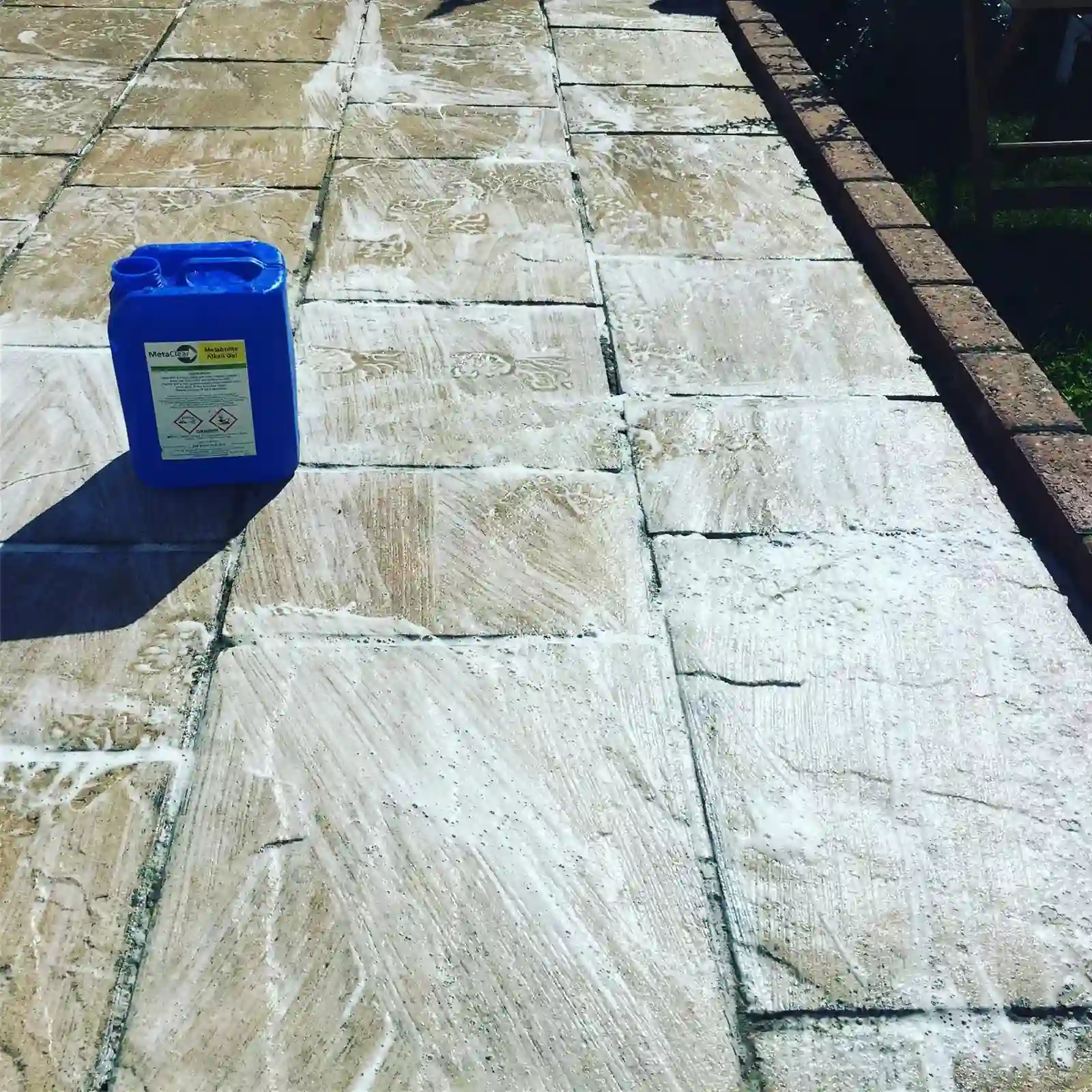
A useful starting point is to separate loose garden material from attached growth. Collecting leaves and soil first reduces the amount that could otherwise be washed into beds or drains. We then inspect the exposed surface and trial a suitable method. Controlled pressure may be useful on robust paths, whereas masonry may call for gentler rinsing or a compatible softwashing treatment. Weak joints, loose stones and deteriorating faces are not washed aggressively.
Plant protection is planned before products or equipment are brought into use. The selection and handling of any treatment follow its instructions, with attention to runoff and nearby sensitive areas. Covering something is not automatically adequate protection, particularly if water can collect beneath it or reach roots. Where appropriate controls cannot be achieved, we discuss a different approach or a reduced scope. The aim is a sensible clean that respects both the material and its setting.
The result
Cleaner surfaces without changing the garden environment
Cleaning can reduce removable growth and reveal the detail of brick, stone or a textured walking surface. It will not remove the shade cast by established trees or stop fresh leaves collecting. Some discolouration may be embedded or simply part of the material, so the trial helps define a reasonable endpoint. Afterwards, removing loose garden debris regularly can help keep the cleaned surfaces manageable. It is not a substitute for repairing damaged joints or correcting water that repeatedly pools along a path.
Your appointment
Coordinating cleaning with garden activity
Choose a visit when the intended route can be cleared without disrupting essential household access. Allow time for protection to be set up and removed, not just for active washing. Treatment conditions and the trial result can affect the sequence. If a gardener or another contractor is also attending, discuss the order beforehand so newly moved soil is not immediately carried over a cleaned path. Damp shaded corners may need longer before they can be assessed fairly or used normally.
Before we visit
Moving containers and identifying sensitive planting
Move manageable containers out of the working space and remove loose garden tools or ornaments. Do not struggle with heavy planters or cut substantial branches simply to prepare; show them in your photographs so access can be discussed first. Identify ponds, edible planting and sensitive specimens. Arrange for pets and children to remain clear and explain any shared path use. If you know that water runs from a path directly into a bed, flag it even when the surface looks dry at the time of the enquiry.
Local conditions
Checking treatment conditions beneath leafy shelter
Leafy shelter does not necessarily make conditions suitable for treatment. Air movement, rain and temperature still affect application and runoff, while damp surfaces can persist beneath foliage. We check the forecast and actual site conditions, adjusting the plan where spray could reach sensitive planting or rainfall would undermine control. Frost risk is also relevant to wet steps. Drying varies between gardens.
Check your location
Dartington and Rattery garden-side access
We cover Dartington and Rattery. Mature gardens, sheltered boundaries and rural approaches vary between properties, so include the route from the entrance to the work area and any gate restrictions when asking for an assessment.
- Dartington
- Rattery
Common questions
Questions about edible plants, shade and containers
Can cleaning be planned beside edible plants?+
Their position needs to be identified before selecting a method or product. Compatibility and protection requirements must be checked rather than assumed. If adequate control cannot be provided, the treatment or the affected cleaning section should change; proximity to planting is not something to improvise around on arrival.
Will tree shade mean the work is not worthwhile?+
Not necessarily. Removing accumulated dirt and growth can still be useful, but the shaded conditions remain afterwards. We discuss a realistic result and ongoing leaf removal rather than suggesting that cleaning will permanently solve a moisture pattern created by the garden.
Must every heavy pot be moved to reach the wall?+
Only the agreed accessible areas need to be included. Photographs can help decide whether a container can safely stay, needs separate moving arrangements or leaves an excluded patch. We should not promise a continuous finish behind objects that cannot be accessed.
Based in Torquay? See our exterior cleaning in Torquay.
For garden and vehicle paving, see patio & driveway cleaning.
Google reviews
What SAS customers say
★★★★★ 80+ five-star reviews
★★★★★
“I had a badly stained patio he treated the whole patio and deep cleaned it with hot water and a patio cleaning machine I was very impressed patio looks like brand new 😎”
★★★★★
“A professional, effective, timely, courteous, friendly cleaning service, provided by Simon and his small team.”