

Exterior cleaning specialists in TorquayCall 01803 424114
SAS Window Cleaning
Render Cleaning in Torquay — SAS exterior cleaning

Render Cleaning in Torquay

Render Cleaning in Torquay

Render and K-Rend cleaning with a finish-appropriate low-pressure treatment, following condition checks and a discreet test.
  • ✦ 30+ years' experience
  • ✦ Fully insured
  • ✦ 80+ 5★ reviews
  • ✦ Free quotes

Get a free quote

Fast, friendly, no-obligation pricing.

Prefer to talk? Call 01803 424114.

Local render cleaning specialists

Professional render cleaning

Render looks fantastic when it's clean, but Torquay's damp coastal air quickly leaves green algae, black streaks and red staining across walls. Our render cleaning service restores the original colour of your home without the risk and cost of repainting.

Pressure washing render can crack it, blow holes in the surface and force water behind it. Instead we use a low-pressure soft wash system with specialist biocide treatments that break down the organic growth and kill it at the root. It's safe on traditional sand and cement, K-Rend, silicone and monocouche renders.

We test the treatment on a small area first, apply it evenly, let it dwell, then gently rinse for a uniform finish. Windows, sills and doors are rinsed afterwards so nothing is left behind. The treatment continues working for weeks, so your render often looks even better after we've gone.

Why it matters in Torquay

Why render cleaning matters

Green and black streaks

Damp coastal weather makes algae grow on render, causing green and black streaks. It's especially common on north-facing walls in Torquay.

Salt and pollution staining

Seafront homes and businesses pick up salt and grime that discolours light-coloured render. A soft wash restores the original colour.

Protecting your investment

Render and K-Rend are expensive. A gentle soft wash cleans them safely, and costs a fraction of repainting or re-rendering.

Bright Riviera homes

Clean white and pastel render is part of Torquay's seaside look. A fresh exterior lifts kerb appeal and property value.

Our process

How our render cleaning works

01

Test

We test the treatment on a small area.

02

Apply

Soft wash solution applied evenly.

03

Dwell

Left to break down organic staining.

04

Rinse

Gently rinsed for a uniform finish.

Local coverage

Render Cleaning across Torquay

We provide render cleaning throughout town. Send your postcode, photographs and any access restrictions for a free quote.

Check whether the mark is on or within the wall

Discoloured render needs assessment before anybody chooses a cleaning product. Green surface growth, airborne dirt, mineral deposits and marks from a leaking fitting can look similar at a glance but require different responses. Cleaning may help with suitable surface contamination. It cannot correct moisture entering through defective details or repair a crack. Tell the cleaner where the marks appear and whether you have noticed changes indoors, since that may indicate a separate building issue rather than a straightforward exterior cleaning task.

If the wall is otherwise clean and the colour difference comes from patch repairs or fading, further washing may offer little. Blistering, hollow areas, loose finish and open cracks are reasons to seek repair advice first. A wall in Torquay should be considered on its own construction and condition, not just its visible staining. Repeated treatment of a mark that keeps returning beneath a faulty gutter is unlikely to be the useful starting point when the source of water remains unresolved. Check whether decorative details beside the render are made from a different material. Stone surrounds, metal trims and painted features may need protection or their own method. Treating them as part of the same wall without checking compatibility can create avoidable problems, even when the selected treatment is appropriate for the main rendered surface itself.

Identify the render and any previous coating

Through-coloured render, painted render, traditional finishes and insulated wall systems do not share an identical cleaning specification. If you have installer information or product guidance, make it available. Tell the cleaner about paint, water-repellent treatments and repaired sections, even where their exact composition is unknown. An insulated system can include vulnerable junctions and fixings that need particular care. The visible texture alone may not establish what lies beneath or which cleaning method is appropriate for the wall as a whole.

A discreet trial should check how the surface and coating respond, including any change in texture or colour. Low-pressure application does not by itself make every product suitable. Chemistry, contact conditions and the way the product is removed all matter. Acidic cleaners can be inappropriate for some mineral finishes, and aggressive brushing can alter texture. Ask for a material-specific explanation rather than accepting soft washing as a complete description of the process. If compatibility is uncertain, further investigation is preferable to trialling products widely.

Understand what a render treatment can achieve

Organic growth may respond to a suitable treatment, while embedded staining, mineral bloom and rust require different consideration. The cleaner should distinguish these where possible and explain where the diagnosis remains uncertain. Mention any household products already applied and avoid adding another cleaner before the assessment. A more concentrated application is not automatically a better solution. The chosen product should be used according to its instructions, with the surrounding building and the proposed runoff arrangements considered as part of the method.

The achievable finish is cleaner render, not a newly applied wall covering. Original pigment variation, previous repairs, faded paint and weathered texture may remain visible or become more apparent. Areas sheltered beneath eaves can differ from exposed sections even after deposits are treated. Ask whether a test result represents the particular marks you want addressed. If a colour mismatch is the real concern, advice about compatible decoration or repair may be more relevant than further treatment of a wall that is already clean.

Plan around openings, fittings and planting

Windows, vents, air bricks, external sockets and wall-mounted equipment all influence how render can be cleaned. Identify damaged seals, open joints and fittings that cannot tolerate water or treatment. Washing near them should not be improvised once the wall is wet. Rainwater goods and roof junctions also need attention where they direct water over the finish. An appropriate plan considers the whole working face, not just the discoloured patch that first prompted the enquiry or the easiest section to reach.

Move lightweight furniture and decorations away from the wall and discuss climbing plants or attached trellis before the visit. Treatment and rinse water need managing around borders, ponds and rainwater collection arrangements. Keep pets and people away from the working area as advised, and close affected windows. Access in Maidencombe or Babbacombe should be planned from the property's actual layout. Narrow side passages, conservatories and neighbouring boundaries may change the equipment needed or make a section unsuitable for the proposed method.

Make the render-cleaning quote specific

Ask the quotation to name the wall elevations and explain how high or obstructed sections will be reached. Treatment, any rinsing, local stain work and protection of nearby surfaces should be described clearly. Window cleaning afterwards, removal of climbing plants and washing gutters or fascias should not be assumed to be part of render cleaning. Where adjoining walls have different finishes, list them separately. This avoids a method being carried across a boundary simply because the colour or texture looks broadly similar.

Repairing cracks, replacing failed seals and repainting are separate decisions from removing surface deposits. If these need doing first, establish the sequence with the relevant trade and follow material guidance before cleaning newly repaired areas. Ask how unexpected loose render will be handled and who authorises a change to the scope. A written proposal should leave room to stop unsuitable work. It should not imply that an exterior wash confirms the wall is sound, watertight or free of underlying defects that require a building assessment.

Care for the wall without repeated aggressive washing

After the job, follow the advice for the selected treatment and any temporary restrictions around planting, pets or collected rainwater. Review the finish under ordinary viewing conditions once the appropriate stage of the process is complete. If a mark remains, ask whether it is residual contamination or part of the underlying finish before requesting more product. Additional treatment is not automatically helpful, particularly where the wall has already responded as expected and further intervention could change the texture or coating.

For routine maintenance, keep an eye on leaking gutters, overflowing planters and fittings that direct dirty water onto the wall. Resolve those sources rather than repeatedly washing the same streak. Avoid scrubbing with abrasive brushes or trying incompatible household chemicals on a conspicuous patch. Minor dirt may only need a gentle approach permitted by the render manufacturer. Further specialist work should be based on the wall's condition, while fresh cracks, persistent damp or loose sections are directed towards repair advice instead of being folded into another cleaning visit.

Signs you need render cleaning

Render staining may appear as green growth on shaded elevations, dark streaks beneath sills, or tide marks below a leaking gutter. These clues matter: recurring damp at one location can point to a water source, not simply a dirty wall. Look for hairline cracks, hollow or soft patches, flaking paint, damaged sealant around openings and discolouration that returns after rain. Cement, lime and silicone renders have different surface properties, and painted render adds another layer to assess. Strong pressure can roughen the texture, strip coating or force water through a crack. A low-pressure soft wash with a compatible treatment may suit sound render, but a test patch helps check colour and finish response. Some biological staining fades after treatment rather than lifting immediately; mineral marks and moisture-related discolouration may persist. Cleaning can improve a sound elevation; it cannot diagnose or repair leaking gutters, failed render or underlying damp.

Our process step by step

  1. 1.

    Inspect the elevation

    Identify render type, paint finish, staining pattern, cracks, hollow areas and damaged sealant. Point out gutter leaks or indoor damp that may relate to the marks. Avoid flooding open cracks.

  2. 2.

    Protect nearby features

    Cover or avoid suitable fittings, close windows and protect planting. Plan access around paths, doors, vents, cables and any vulnerable sill or threshold. Check coating response on the patch.

  3. 3.

    Test the finish

    Apply a discreet test using the proposed low-pressure soft-wash method and compatible treatment. Check for colour change, coating weakness or texture damage before proceeding. Keep runoff off neighbouring property.

  4. 4.

    Treat gently

    Work in controlled sections, keeping pressure low and allowing the chosen treatment to act as directed. Avoid forcing water into cracks or repeatedly scrubbing one stain. Do not abrade textured finishes.

  5. 5.

    Rinse and review

    Manage runoff and rinse where appropriate. Review the wall after treatment, explain marks that may fade gradually and identify defects for repair by the relevant trade. Note moisture-related staining separately.

Aftercare and how long results last

Follow the treatment guidance before washing the wall or allowing plants to contact treated areas. Keep nearby windows closed until the elevation is dry and check that vents and drainage openings remain unobstructed. If biological growth returns in the same shaded strip, consider whether vegetation, a leaking downpipe or poor drying is maintaining moisture; cleaning cannot alter those conditions. Report fresh cracks, peeling paint or persistent damp instead of applying another wash. Avoid scrubbing render with stiff brushes or using strong household bleach, which can damage texture, coatings and nearby planting. A treated wall may change in appearance gradually, so wait for the stated product guidance before judging whether additional action is sensible. Keep note of the render type and any coating or treatment used for future maintenance.

Render Cleaning FAQs

Is pressure washing suitable for render?

High pressure can scar the texture, loosen paint and drive water through cracks. A low-pressure soft wash with a compatible treatment may suit sound render, depending on its type and coating. A test patch is useful before wider work; weak, cracked or hollow areas may need repair rather than cleaning.

Can you clean painted render?

Possibly, but paint condition and coating type need checking first. Flaking or chalking paint may come away during washing, and the wall could need preparation or repainting instead. Tell the cleaner when it was last painted and mention any known product; a discreet test can reveal how the finish responds.

Will all streaks disappear?

Not necessarily. Algae may respond to treatment, while mineral deposits, faded paint and marks caused by moisture can remain. Biological treatment may continue working after the visit. A test can show likely changes, but it cannot guarantee a uniform colour across walls with different exposure or previous repairs.

What if there are cracks or damp patches?

Point them out before work. Cleaning does not seal cracks, repair render or identify the source of damp. A leaking gutter, failed seal or building defect should be investigated, since washing over a continuing water problem can leave the same streaks returning.

How are windows and plants protected?

Discuss nearby glazing, open vents, lights, cables, paths and planting before treatment. Close windows and plan protection or careful application based on the selected product and runoff route. Keep children and pets away from the working area, and follow the specific advice about when surrounding plants can safely be uncovered.

Where we offer render cleaning

  • Paignton
  • Brixham
  • Newton Abbot
  • Kingsteignton
  • Kingskerswell
  • Teignmouth
  • Dawlish
  • Bovey Tracey
  • Ashburton
  • Buckfastleigh
  • Totnes
  • Dartington
  • Dartmouth
  • South Brent

Our work

Render Cleaning work examples

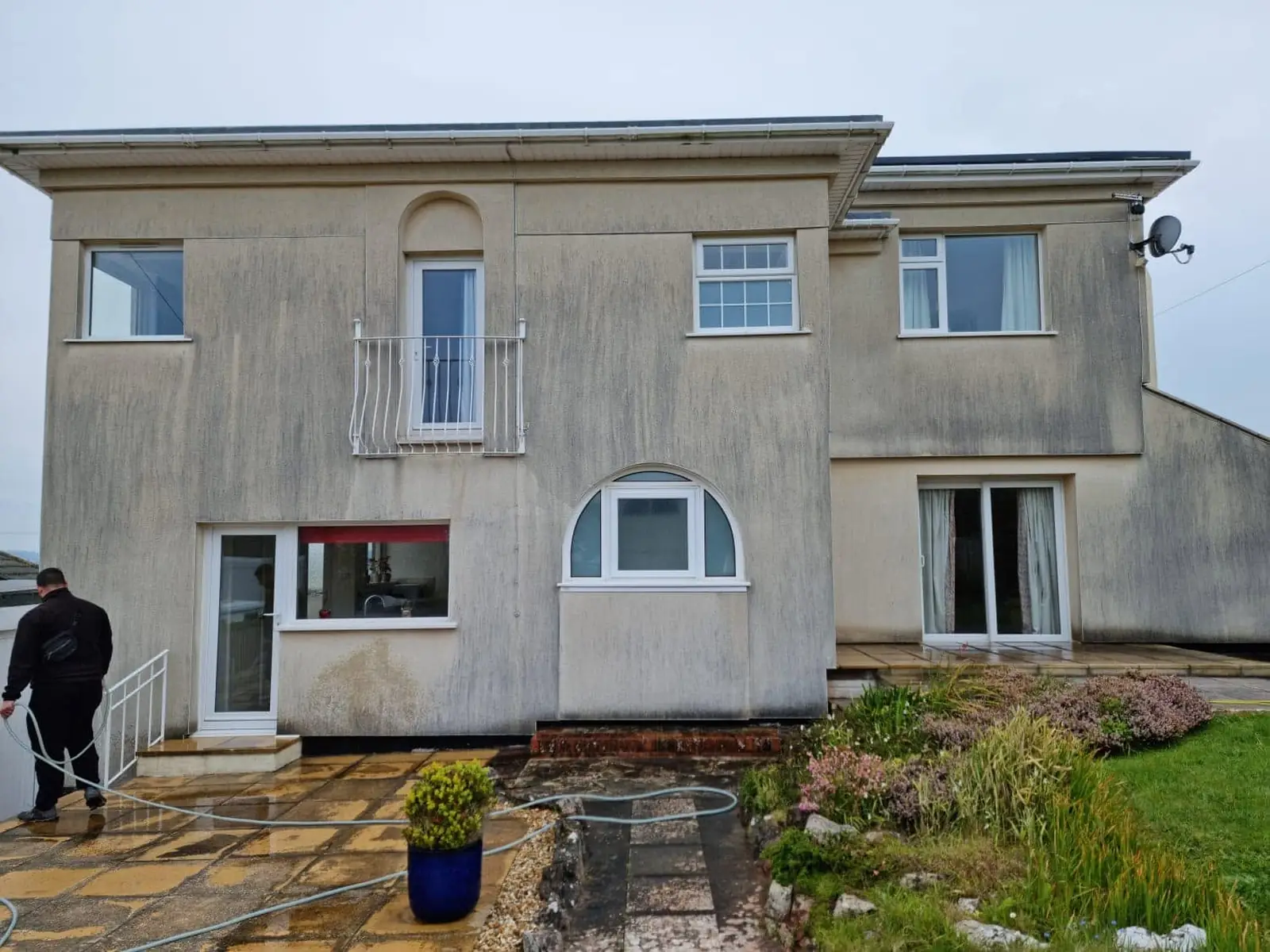
Streaked render cleaned — before
Before
Streaked render cleaned — after
After
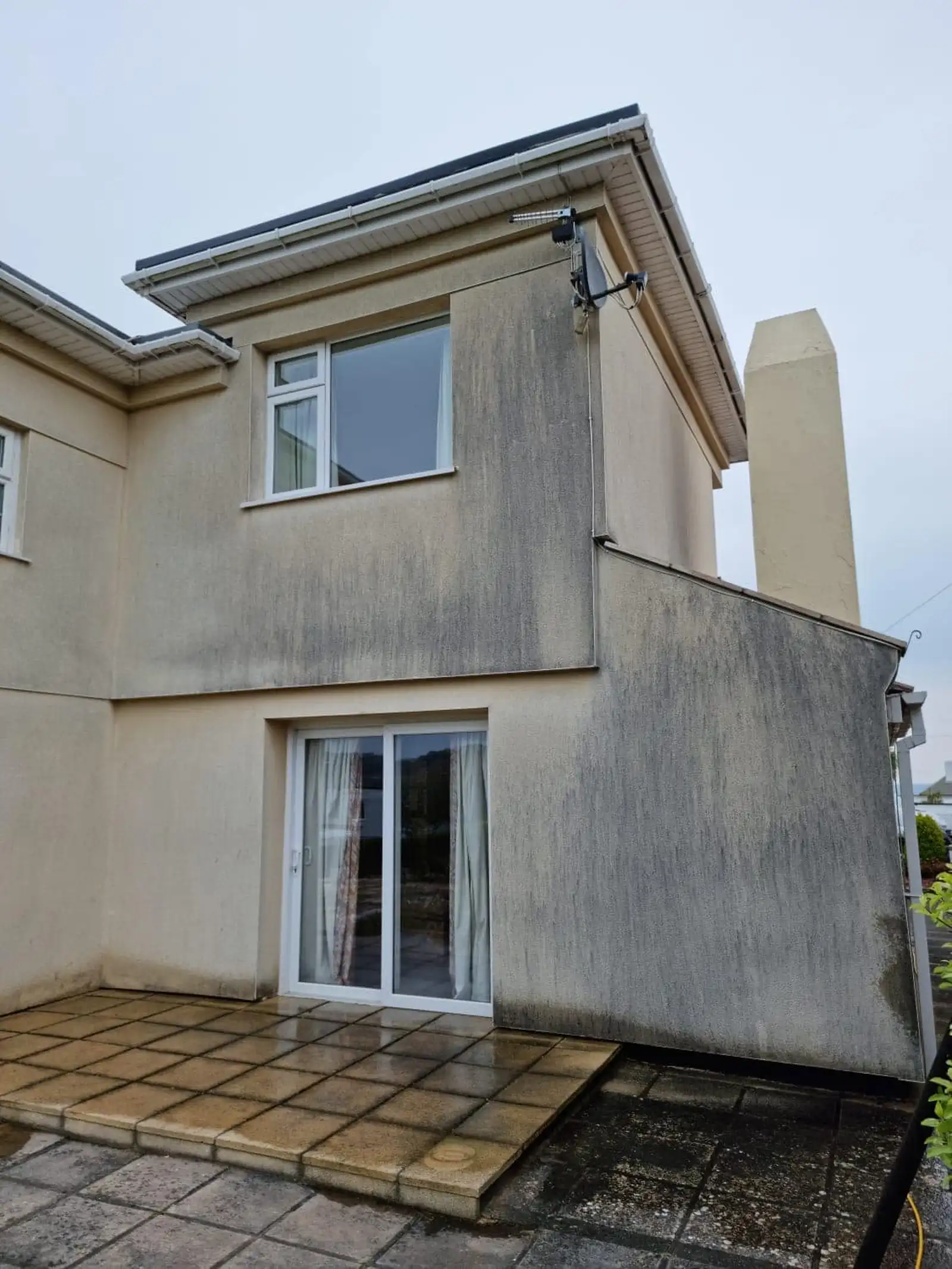
Dark streaks on the side elevation of the rendered house before cleaning
Side elevation · Before
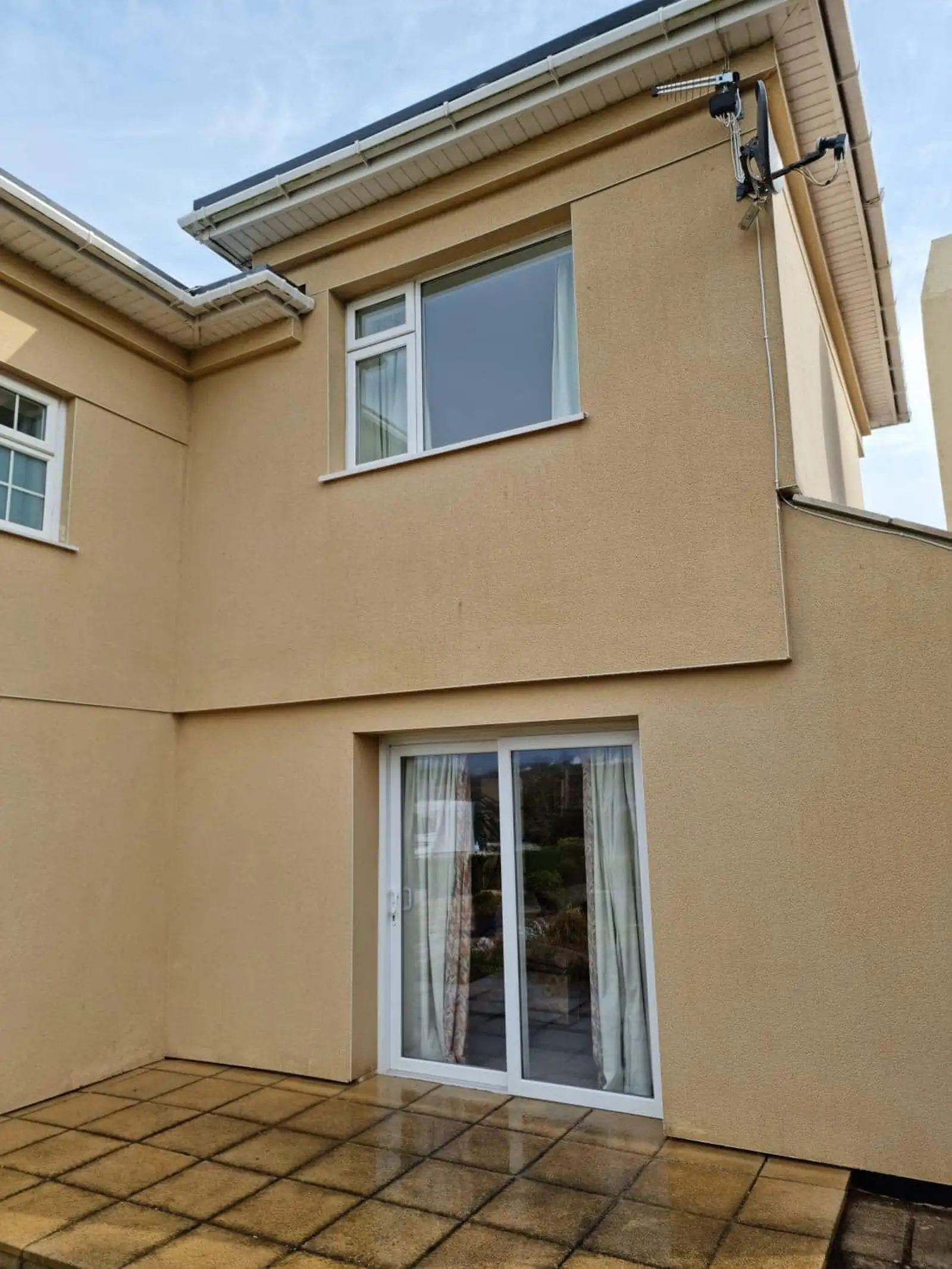
Brighter warm-toned side elevation of the same rendered house after cleaning
Side elevation · After

SAS Window Cleaning · Our work

Streaked render cleaned

Dark streaking reduced across a rendered house, leaving the front and side elevations brighter and more even.

The problem
Grey and black vertical marks covered the pale render below the eaves and around upper windows.
Our usual approach
Our usual render approach is a finish-appropriate low-pressure soft wash, following condition checks and a discreet treatment test.
The result
The warm render tone is clearer and the extensive vertical staining is substantially reduced.

Explore this work

Google reviews

Render Cleaning reviews from Torquay customers

★★★★★ 80+ five-star reviews

★★★★★

“I had a badly stained patio he treated the whole patio and deep cleaned it with hot water and a patio cleaning machine I was very impressed patio looks like brand new 😎”

Andrew Payne · Google

★★★★★

“A professional, effective, timely, courteous, friendly cleaning service, provided by Simon and his small team.”

Michael Roy Cook · Google

FAQs

Render Cleaning Torquay — your questions answered

Is soft washing safe on K-Rend?+

Yes. Soft washing is the method recommended for K-Rend and silicone renders.

How long does render cleaning last?+

Typically several years, depending on how sheltered or exposed the walls are.

Can you remove red staining?+

Red staining is a type of algae. Our treatments are designed to remove it, though heavy cases may need a second application.

Is it cheaper than painting?+

Usually much cheaper — and it restores the original finish rather than covering it up.

Other services

Contact us

Get your free quote today

Need a quote or have a question? Call, WhatsApp or send us a message — we're open 24 hours, 7 days a week and always happy to help.

Areas covered

Torquay & surrounding areas

Opening hours

Open 24 hours, 7 days a week

Get a free quote

Fast, friendly, no-obligation pricing.

Prefer to talk? Call 01803 424114.

Accredited, insured & trusted by Torquay

  • SafeContractor approvedSafeContractor approved
  • PASMA trainedPASMA trained
  • Google reviews★★★★★5★ Google reviews
  • Facebook reviews★★★★★5★ Facebook reviews
  • CheckatradeCheckatrade