

SAS Window Cleaning · Dartmouth
Exterior Cleaning & Pressure Washing in Dartmouth
- ✦ 30+ years' experience
- ✦ Fully insured
- ✦ 80+ 5★ reviews
- ✦ Free quotes
Get a free quote
Fast, friendly, no-obligation pricing.
What’s included
Send the approach and step details for assessment
- Inspect step treads, risers and connecting paths for loose edges, weak joints and existing drainage problems.
- Assess accessible sound masonry walls and garden walls, keeping unstable sections and unsuitable finishes outside the scope.
- Plan equipment movement, hose routes and exclusion areas where space is tight or pedestrian access is shared.
- Agree bin-store preparation and the collection of loosened debris, with attention to where rinse water could travel downhill.
Controlling the clean on confined sloping routes
We look at the approach and the work area together. Carrying equipment through a narrow route and dealing with water at several levels can determine what is practical. Loose grit and debris are collected before trial cleaning. On steps, the edges and joints deserve as much attention as the centre of the tread: a visibly dirty but sound section may be more straightforward than a lightly stained one with failing mortar.
Controlled pressure is considered only where the material can tolerate it. Sound masonry may instead benefit from gentle washing or a suitable softwashing treatment, used under its stated conditions. We do not assume a persistent mark is removable salt or ordinary organic growth without assessing it. Sensitive neighbouring finishes and openings are protected, and water is not directed into vulnerable joints. If runoff cannot be controlled on a steep route, the plan needs revision rather than simply starting at the top.
The result
Reviewing cleaned steps without promising restored grip
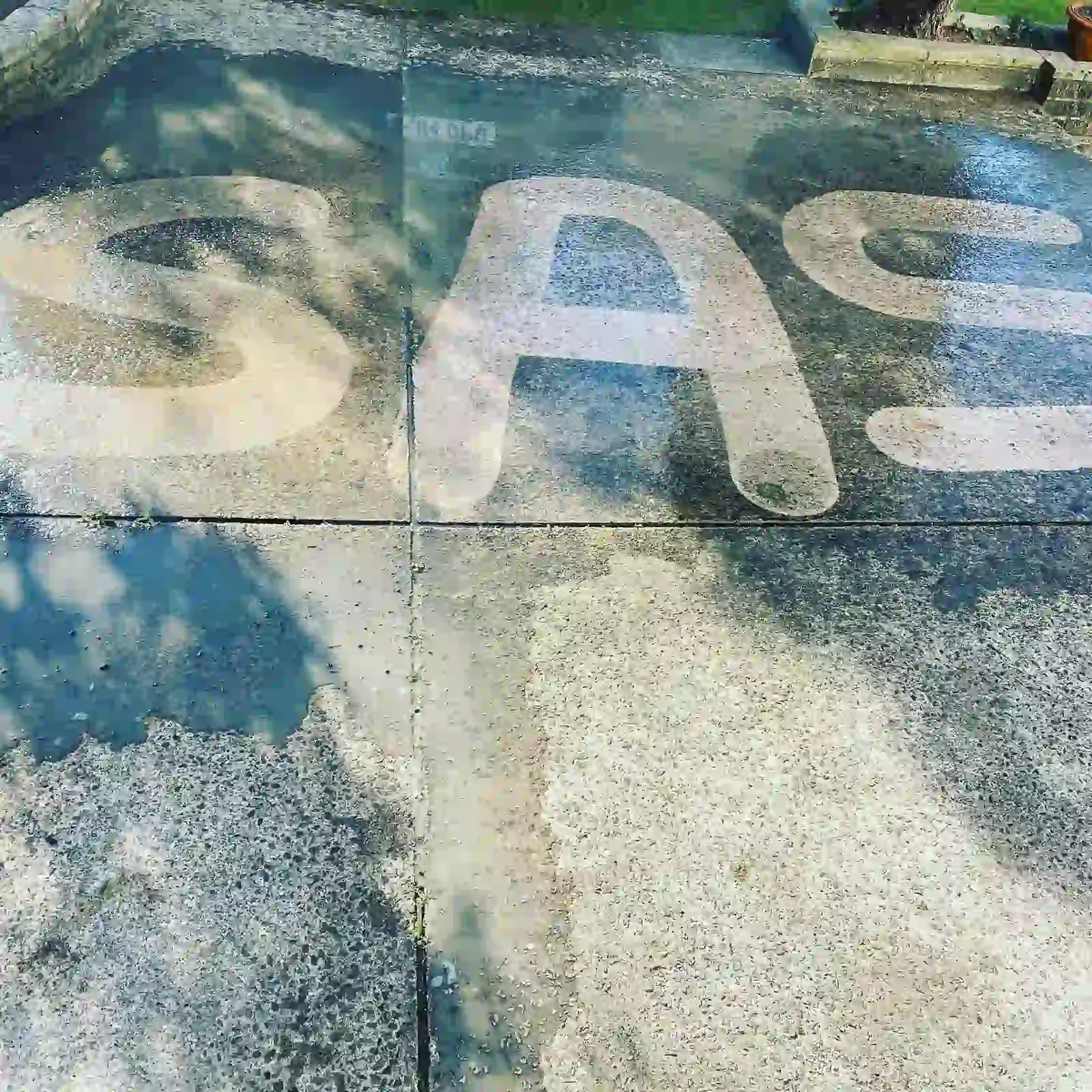
The expected improvement is removal of suitable surface dirt and growth, leaving a more legible surface texture and tidier access route. Cleaning cannot level worn steps, fix loose edges or guarantee traction in wet conditions. Brick and stone may retain embedded marks or natural colour differences. We check lower sections for redistributed debris and review the trial against the finished result. Where a mark remains, the next question is what it is and what removal would risk, not how much extra pressure to apply.
Your appointment
Agreeing temporary restrictions on essential routes
A suitable appointment allows time for safe equipment setup and a controlled sequence between levels. Narrow routes may need temporary closure while individual sections are worked on; this must be agreed beforehand. Do not plan essential passage immediately after the nominal finish without discussing surface conditions. Some corners can remain wet while exposed treads appear dry. If safe pedestrian separation or runoff control cannot be maintained on the day, postponing or reducing the work is preferable to rushing through it.
Before we visit
Preparing landings, entrances and shared passages
Clear portable belongings from the agreed route and identify an alternative entrance if one genuinely exists. Tell us about mobility needs, deliveries and shared pedestrian use. Flag any low opening or doorway that has admitted water before, as well as suspect drains or unstable handholds near the work. Keep pets and children away during cleaning. Heavy objects on landings should be discussed in advance rather than moved into a position that narrows access further or obstructs the planned water route.
Local conditions
Judging estuary exposure and downhill water flow
Exposure varies across Dartmouth, and proximity to the estuary does not prove what is on a particular wall. Gusts can affect spray direction, while rain increases water moving down steep routes. We assess those conditions along with temperature and frost risk before starting. Blackawton and Halwell require the same property-specific judgement rather than a coastal assumption. Work may need rescheduling when safe access or the conditions required for a proposed treatment cannot be maintained.
Check your location
Dartmouth, Blackawton and Halwell visit planning
Dartmouth, Blackawton and Halwell are within our coverage. Please describe restricted approaches and gate widths where relevant. Town steps, sheltered routes and inland properties need different arrangements, so the cleaning plan follows the individual address and materials.
- Dartmouth
- Blackawton
- Halwell
Common questions
Access and exposure questions for steep properties
Can you clean steps if they are the only way into the house?+
The access arrangement must be agreed first. A staged sequence may work in some layouts, but not every narrow flight can remain usable during cleaning. Explain essential movements and mobility needs so we can decide whether a safe appointment or a smaller scope is practical.
Does an estuary-facing wall always need a stronger wash?+
No. Exposure alone does not identify the deposit or the strength of the masonry. We inspect the surface and use a trial where appropriate. Increasing pressure on the basis of location could damage joints without resolving the actual cause of a mark.
What happens if water would run onto a neighbouring route?+
That needs addressing before work starts. Show the connection and explain who uses the route. Suitable containment, a different method or revised timing may be needed; if water cannot be managed appropriately, the affected work should not proceed as proposed.
Based in Torquay? See our exterior cleaning in Torquay.
For garden and vehicle paving, see patio & driveway cleaning.
Google reviews
What SAS customers say
★★★★★ 80+ five-star reviews
★★★★★
“I had a badly stained patio he treated the whole patio and deep cleaned it with hot water and a patio cleaning machine I was very impressed patio looks like brand new 😎”
★★★★★
“A professional, effective, timely, courteous, friendly cleaning service, provided by Simon and his small team.”