
Exterior cleaning specialists in TorquayCall 01803 424114
SAS Window Cleaning
Commercial Exterior Cleaning in Torquay — SAS exterior cleaning

Commercial Exterior Cleaning in Torquay

Commercial Exterior Cleaning in Torquay

Scheduled exterior cleaning for businesses across Torquay — windows, signage, car parks, cladding and walkways, on a contract that suits you.
  • ✦ 30+ years' experience
  • ✦ Fully insured
  • ✦ 80+ 5★ reviews
  • ✦ Free quotes

Get a free quote

Fast, friendly, no-obligation pricing.

Prefer to talk? Call 01803 424114.

Local commercial exterior cleaning specialists

Professional commercial exterior cleaning

First impressions matter for every Torquay business. Whether you run a shop, office, hotel, holiday let, school or industrial unit, a clean exterior tells customers you care. We provide reliable commercial exterior cleaning across Torquay on a schedule that suits you.

Our services include window cleaning, signage and cladding cleaning, car park and walkway pressure washing, gum removal, gutter clearance and render soft washing. We're SafeContractor approved and PASMA trained, with full public liability insurance and RAMS provided on request.

Because we're open 24 hours, 7 days a week, we can work early mornings, evenings or weekends to avoid disrupting your customers or guests. We'll survey the site, agree a scope of work and provide a fixed written price, with photo reports after every visit so you always know the job's been done.

Why it matters in Torquay

Why business premises benefit from regular care

A tourism-driven town

Torquay relies on visitors. Hotels, restaurants and shops along the seafront and harbour need to look their best all season.

Salt and weather wear

Sea air and rain dull signage, glass and cladding quickly. Scheduled cleaning keeps your premises looking professional.

Safety for staff and customers

Slippery walkways, steps and car parks are a liability. Regular cleaning reduces slip risks on wet days.

Work around your hours

We're open 24 hours, 7 days a week, so we can clean early, late or out of season to avoid disrupting your business.

Our process

How our commercial exterior cleaning works

01

Site visit

We survey and agree a scope of work.

02

Quote

Fixed written price and schedule.

03

Clean

Minimal disruption to your customers.

04

Report

Photo report after every visit.

Local coverage

Commercial Exterior Cleaning across Torquay

We assess shops, offices, holiday parks, landlord-managed buildings and communal areas throughout town. Share the site address, operating hours and access requirements.

Define the business problem before the cleaning task

Start by explaining how the exterior space is used. A shop entrance, staff access route, service yard and visitor seating area have different priorities even within the same premises. Deposited dirt may be the main concern, or there may be contamination that needs a specialist response. Cleaning can address suitable surface deposits, but it does not repair uneven paving or correct drainage design. A useful brief describes the problem affecting daily operation rather than simply asking for everything outside to be washed.

Decide where cleaning is unnecessary as well. Sound cladding with minor colour variation may not need intervention, while a loose sign or damaged entrance threshold needs repair before washing. At commercial premises in Torquay, the best starting point is a walk-round with someone who understands the building and its use. That allows maintenance faults, specialist hazards and ordinary cleaning needs to be separated. It also avoids spending effort on a cosmetic area while the route used by staff remains awkward or obstructed. For leased premises, establish whether the landlord or managing agent must approve products, access equipment or work on shared finishes. The person booking the visit may not control every part of the exterior. Sorting out consent beforehand avoids a cleaner arriving with an agreed task that the occupier is not authorised to commission on that surface.

Specify materials and sensitive building details

Commercial exteriors often combine glazing, coated metal, render, masonry and several paving types. A method suitable for a yard may be unsuitable beside shopfront seals or painted signage. Provide maintenance instructions, coating details and information about previous cleaning products where available. The assessment should identify test areas and any fragile finishes before a broad cleaning approach is agreed. Mixed materials deserve separate consideration even when the aim is a consistent appearance across the frontage or the whole site.

Electrical fittings, door-entry systems, ventilation openings and security equipment need particular attention. Point out equipment that cannot be isolated and areas where water must not enter. Cleaning should not interfere with air intakes, food preparation arrangements or other sensitive operations. If deposits could involve hazardous substances, explain that before the site is assessed; an ordinary exterior wash may be inappropriate. A suitable plan recognises these boundaries instead of treating every mark as routine dirt that can be removed with stronger products or additional pressure.

Organise people and access around the work

Discuss the movement of staff, customers, suppliers and anyone using a shared entrance. Cleaning equipment, hoses and wet surfaces may require temporary separation from pedestrian routes. Agree how people will be directed and who can authorise changes if the planned route becomes unsuitable. An alternative entrance is only helpful if it is accessible and its use has been properly considered. Cleaning arrangements should also preserve emergency access rather than relying on an informal assumption that people can simply walk around the equipment.

Scheduling should follow the premises' actual operation. Deliveries, opening preparations and staff changeovers can matter even when the business is closed to visitors. Confirm who will provide entry, control alarms and approve the start and completion of work. At a site in Chelston, neighbouring occupiers may also need notice about shared access. Work outside normal opening activity still needs a practical plan; it does not remove the need to manage noise, lighting, equipment movements or people unexpectedly arriving at the property.

Agree water management and site responsibilities

Identify the water supply, drainage layout and any restrictions imposed by the property manager. Runoff from vehicle areas, treatment products and removed deposits needs an appropriate handling plan. It should not be directed into a drain simply because that drain is nearby. Where the drainage destination is uncertain, establish the arrangement before work starts. The business and cleaner should know who is responsible for isolating sensitive equipment, moving stock and checking that the working area is ready for the agreed method.

Ask for risk assessments and method information relevant to the actual site and task. Generic paperwork is less useful than clear arrangements for your entrances, materials and operations. Access permissions, waste handling and any specialist equipment should be covered where applicable. Do not infer that a cleaner is taking responsibility for building defects or all site safety simply by accepting the job. Responsibilities need to be understood by the people supervising the premises as well as those carrying out the cleaning.

Build a quote that can be checked properly

Use a schedule of named areas rather than a vague description such as exterior clean. Specify the included glazing, signs, cladding panels, entrances, walkways and other surfaces. State whether furniture movement, local stain treatments, debris removal and adjacent splash rinsing are included. Roofs, gutters, canopies, grease contamination and specialist access should be identified separately where relevant. This makes proposals easier to compare and gives the site contact something practical to check before authorising work or approving a completed visit.

Agree the expected result in terms suited to each material. Deposited grime may be removable while faded paint, etched glass, rust or old repairs remain visible. A test area can clarify expectations without suggesting that every section will finish identically. Record exclusions, inaccessible areas and the process for authorising additional work. If cleaning reveals a defect, there should be a clear route for reporting it and pausing affected work rather than quietly extending the task into a repair that was never specified.

Handover and plan proportionate maintenance

At handover, check the agreed areas and any restrictions on reopening them. A surface can look ready while a treatment, coating or jointing operation still requires care. Make sure staff know which routes are available and whether stock or furniture can be returned. Discuss any areas left untreated, residual stains and defects requiring another trade. A useful completion record explains what was done and what needs attention, rather than treating a general impression of cleanliness as evidence that every maintenance issue has been resolved.

For ongoing work, review condition and usage rather than repeating the same specification automatically. Food deposits near seating, dirt at an entrance and grime on sheltered cladding may build up differently. Routine housekeeping by staff can reduce loose debris between specialist visits, provided the materials and cleaning products are suitable. Update the cleaning plan when layouts, access arrangements or tenants change. The aim is a manageable exterior maintenance process for the premises, with cleaning directed where it remains useful and repairs addressed through the appropriate route.

Signs you need commercial exterior cleaning

Commercial exterior problems affect more than appearance: slippery entrance paving can concern visitors, algae may mark shaded elevations, and dirt around a loading bay can be tracked indoors. Look for the areas generating complaints or extra maintenance and separate them from general cosmetic work. Vehicle residue, food spills and routine footfall need different treatments. Identify the site materials, including cladding, painted metal, masonry, glass and paving, and flag signs, access readers, cameras, vents, door seals and electrical fittings. Check whether coatings are peeling or joints failing; cleaning cannot repair them. Operating constraints matter too: delivery routes, customer entrances, staff breaks, accessible paths and neighbouring occupiers can limit when a zone is available. Drainage requires attention where wash water could carry oils or detergents into surface water drains. A clear scope should identify exact elevations and ground areas, treatment handling, barriers, waste collection and exclusions.

Our process step by step

  1. 1.

    Walk the site

    Identify priority areas, materials, stains, defects and sensitive equipment. Mark customer routes, loading movements, shared boundaries and the exact work limits. Keep signs visible during diversions.

  2. 2.

    Coordinate access

    Agree a contact, suitable work windows and any temporary diversions. Keep emergency exits and accessible routes usable, and plan barriers around wet surfaces. Coordinate with the site contact.

  3. 3.

    Plan treatment and runoff

    Select a method for each surface and assess where water and residues will go. Flag oily bays, surface-water drains and any restrictions on discharge. Separate oily residues from clean water.

  4. 4.

    Clean in defined zones

    Use the agreed equipment and compatible treatments, protecting signs, sensors, vents and door details. Complete sections in a sequence that suits site operations. Protect access readers from spray.

  5. 5.

    Handover the area

    Collect loosened debris, remove barriers only when safe and review the completed scope with the site contact. Record defects or excluded work for follow-up. Record completed zones at handover.

Aftercare and how long results last

Keep pedestrian barriers in place until the cleaned surface is safe to use, and notify staff or visitors through the site’s usual communication route. Check that loading routes, accessible entrances and emergency exits are available before normal operations resume. Sweep loose leaves and spillages as part of routine facilities care; oil or food residue should be dealt with promptly using a site-approved method. Monitor high-footfall thresholds and shaded corners, since traffic and moisture affect how quickly grime returns. Keep records of treatments and any drainage arrangements for future contractors. Do not assume a clean has remedied worn anti-slip finishes, damaged cladding or failed sealant; refer those issues for repair. If a new stain appears, identify its source before applying another product, particularly near drainage points. Review the work scope against the site plan so that excluded elevations, signage or canopies are not mistaken for completed areas.

Commercial Exterior Cleaning FAQs

Can cleaning be done while the business is open?

It depends on the areas, footfall and equipment. A safe plan may use barriers, temporary diversions or separate work zones, while preserving emergency access and accessible entrances. Share operating hours, deliveries and busy periods before agreeing arrangements; no site should assume that all routes can be closed at once.

What information is useful for a quote?

Provide a site plan or clear list of areas, surface materials, access restrictions, operating hours and known stains or defects. Mention drainage, water supply, sensitive equipment and neighbouring occupiers. This allows the scope to distinguish paving, cladding, windows and loading bays rather than treating the whole exterior as one unspecified task.

Are repairs included in exterior cleaning?

No, repairs such as replacing sealant, fixing loose cladding or renewing damaged paving are separate from washing. Point out suspected defects during the walk-through so they can be excluded or assessed appropriately. A cleaned surface can make deterioration easier to see, but cleaning should not be presented as a repair.

Can loading bays be washed?

They can be assessed, but oil, fuel or other residues change how wash water must be managed. Describe the materials stored or vehicles used there and identify nearby drains. The site plan should determine suitable containment and discharge arrangements; dirty runoff should not simply be sent into a surface-water drain.

How should the work be handed back?

Agree who will inspect the named areas and confirm when barriers can be removed. Check that routes are safe, debris is collected and any excluded or defective sections are recorded. A handover note helps facilities teams distinguish completed cleaning from repairs, additional treatment or areas not included in the scope.

Our work

Commercial Exterior Cleaning work examples

High-level exterior access work — On-site access
On-site access

SAS Window Cleaning · Our work

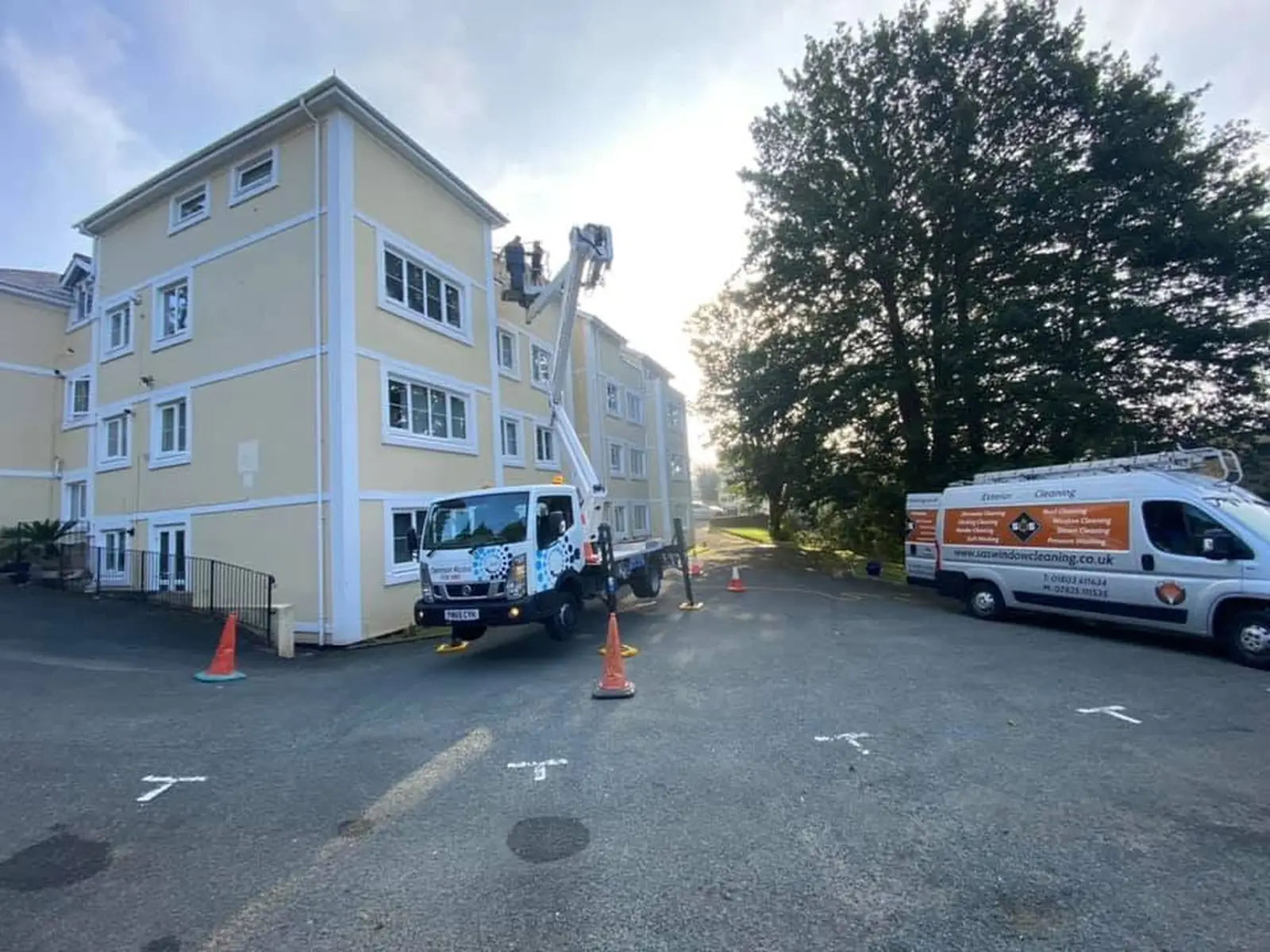
High-level exterior access work

An access platform set up beside a multi-storey building for work at upper-elevation height.

The problem
Upper exterior areas require safe reach and a managed working zone at ground level.
Our usual approach
For higher exterior cleaning, SAS normally reviews the surface, access method and site use before agreeing treatment and working boundaries.
The result
A raised platform, deployed stabilisers and cones form the visible working setup; no completed cleaning result is claimed.
Explore this work

Google reviews

Commercial Exterior Cleaning reviews from Torquay customers

★★★★★ 80+ five-star reviews

★★★★★

“I had a badly stained patio he treated the whole patio and deep cleaned it with hot water and a patio cleaning machine I was very impressed patio looks like brand new 😎”

Andrew Payne · Google

★★★★★

“A professional, effective, timely, courteous, friendly cleaning service, provided by Simon and his small team.”

Michael Roy Cook · Google

FAQs

Commercial Exterior Cleaning Torquay — your questions answered

Do you offer commercial contracts?+

Yes — we offer one-off cleans and scheduled contracts weekly, monthly or quarterly.

Can you work out of hours?+

Yes. We're open 24 hours, 7 days a week, and can work around your opening times.

Are you insured for commercial work?+

Yes, we're fully insured, SafeContractor approved and can supply RAMS on request.

Do you clean holiday lets between guests?+

Yes, we work with holiday let owners across Torquay to keep properties guest-ready.

Other services

Contact us

Get your free quote today

Need a quote or have a question? Call, WhatsApp or send us a message — we're open 24 hours, 7 days a week and always happy to help.

Areas covered

Torquay & surrounding areas

Opening hours

Open 24 hours, 7 days a week

Get a free quote

Fast, friendly, no-obligation pricing.

Prefer to talk? Call 01803 424114.

Accredited, insured & trusted by Torquay

  • SafeContractor approvedSafeContractor approved
  • PASMA trainedPASMA trained
  • Google reviews★★★★★5★ Google reviews
  • Facebook reviews★★★★★5★ Facebook reviews
  • CheckatradeCheckatrade