

SAS Window Cleaning · Buckfastleigh
Render Cleaning in Buckfastleigh
- ✦ 30+ years' experience
- ✦ Fully insured
- ✦ 80+ 5★ reviews
- ✦ Free quotes
Get a free quote
Fast, friendly, no-obligation pricing.
What’s included
Describe earlier treatment and returning wall growth
- Consideration of recurring marks in relation to the immediate wall surroundings.
- Identification of render, coatings and delicate older surface details.
- Checking visible defects before a small trial establishes treatment response.
- Soft-wash application and controlled rinse with nearby doors and glazing rinsed.
Use treatment history to assess recurrent staining
Specialist treatment is applied with low pressure, allowed to dwell and then rinsed gently. This addresses biological growth without chasing it with a damaging jet. Assessment is essential for K-Rend and silicone finishes, including any older repairs that may respond differently from the main wall.
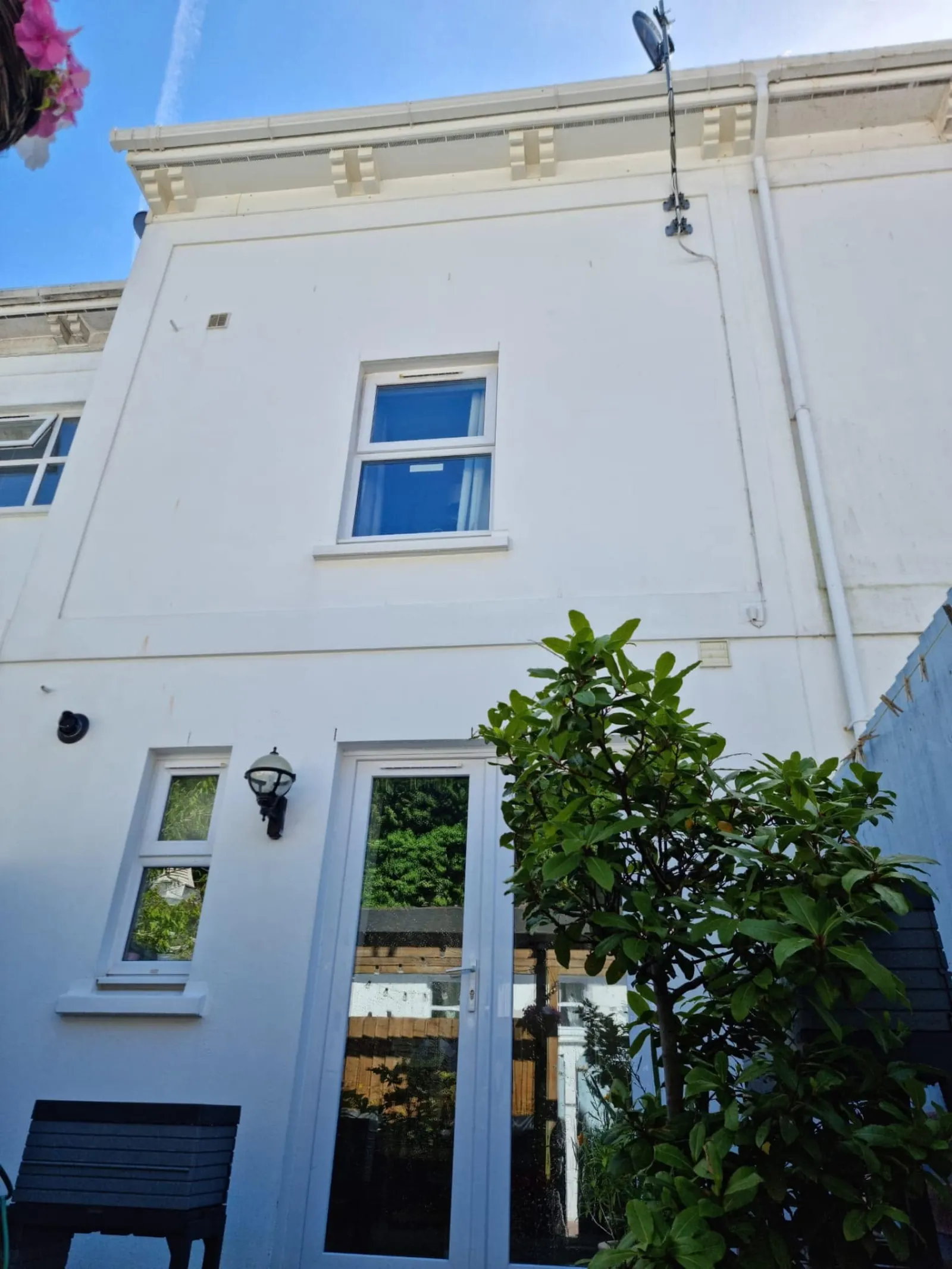
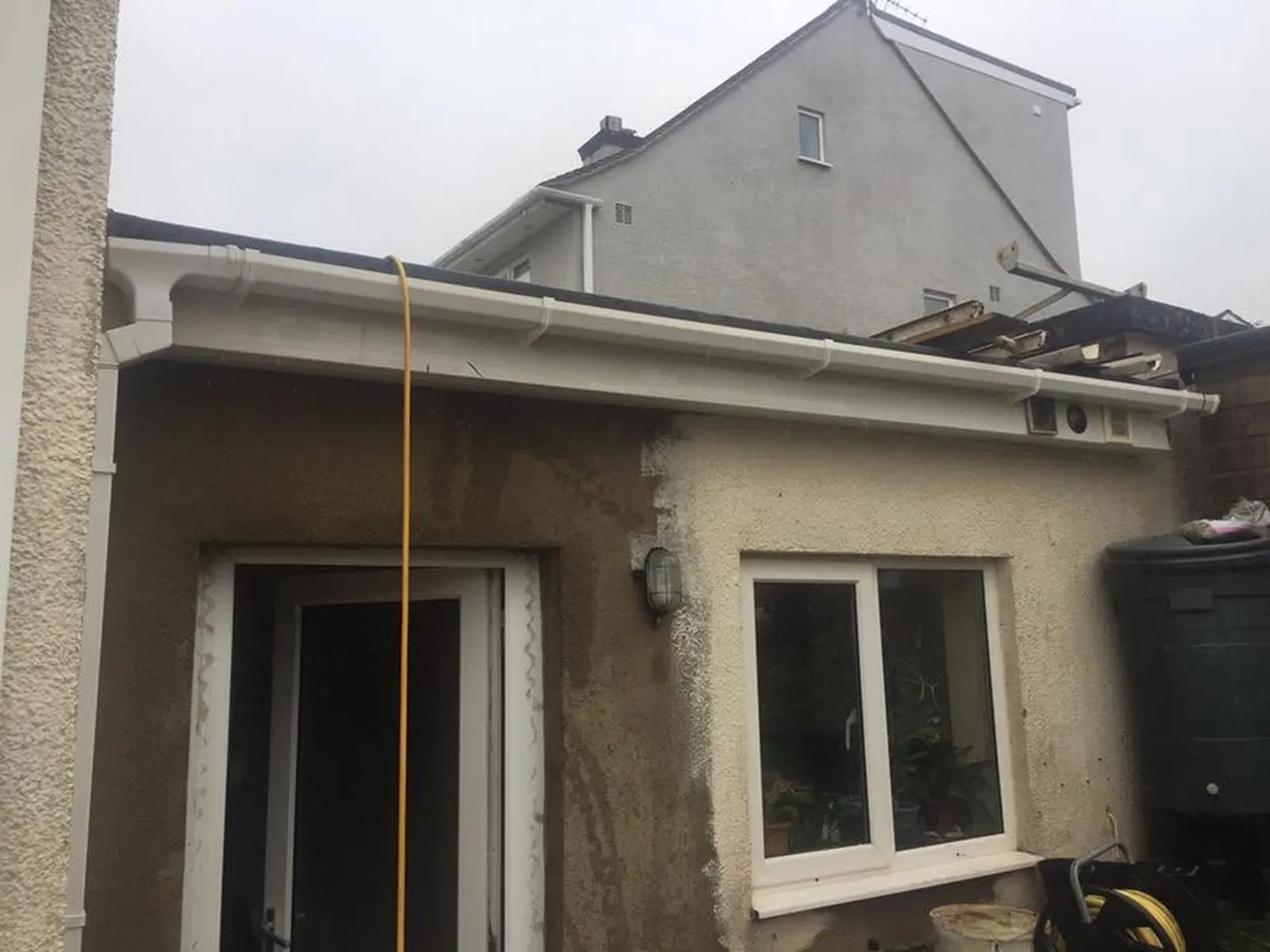
For recurrent staining, ask what the previous treatment addressed and whether a coating was applied afterwards. That history helps avoid choosing a product on the assumption that bare render is exposed. On a Buckfastleigh wall, a green film and a dark line below a fixing may have separate causes, so the trial should not be interpreted as proof that every mark will respond. Controlled low-pressure application should preserve the finish, with particular care around uncertain older edges. More contact or stronger solution is not automatically the answer to a reluctant stain.
The result
Reducing deposits without changing a shaded setting
Treatment can reduce organic staining, but cannot guarantee that sheltered conditions will stop encouraging growth. It also leaves structural cracks, worn coatings and failed render unresolved. Repair or repainting may therefore remain necessary even when the cleaned sections look brighter.
The strongest case for cleaning is a sound finish obscured by removable growth, not an expectation that treatment will change the surrounding environment. Near Dean Prior, a sheltered wall may look substantially clearer after cleaning yet remain the first elevation to show new algae later. That does not make permanent prevention a sensible promise. Ask what the dry trial indicates about ordinary dirt, biological staining and underlying colour separately. Where the remaining contrast comes from a worn coating, further cleaning risks pursuing a result that belongs to a different decision.
Your appointment
Record where growth first returns to the wall
Build in time for the trial and treatment dwell rather than expecting an instant transformation. The appearance may improve progressively afterwards, with no guaranteed finishing interval or promise about how long cleanliness will last.
Instead of booking repeated cleaning at a fixed interval, keep a simple record of where new growth first appears after the initial visit. Compare dry photographs from similar viewpoints and ask for advice when the pattern becomes clear. For a Buckfastleigh or Dean Prior wall, that may support a limited future treatment rather than another whole-house scope. If you are coordinating decoration, let the cleaned finish be assessed and the coating specification determine readiness. Do not treat the end of the washing visit as automatic permission to paint straight over it.
Before we visit
Agree a working corridor beside crowded elevations
Point out fragile finishes and planting close to the elevation. Move loose garden belongings where practical and explain any shared access or obstructions that are not obvious in a photograph.
Where trees and garden features crowd the elevation, agree the working corridor rather than clearing the whole plot without advice. Identify ponds, edible beds and animal areas, including those below the wall where treatment water might travel. In Buckfastleigh, a narrow shared route may require a specific access arrangement with neighbours. Discuss how doors will remain usable or what temporary alternative is needed. Keep any keys or gate instructions available and nominate someone who can approve a necessary pause if the exposed finish differs from the information supplied beforehand.
Local conditions
Observe the wall through a wet spell
Tree cover can leave a sheltered Buckfastleigh wall slower to dry than an open neighbour. That local contrast is more useful than a general claim about river-side properties.
A Dart-side setting does not by itself explain every damp mark. Look at how the selected wall behaves through a wet spell: widespread slow drying beneath foliage differs from a single persistent patch around a junction. Report those observations without assuming either is a cleaning diagnosis. For the working day in Buckfastleigh, ask about rain, wind drift and surface temperature as separate considerations. Even a sheltered application can be unsuitable if the product cannot achieve its required contact conditions, so agree a realistic postponement arrangement before access commitments are made.
Check your location
Shaded rendered walls around Buckfastleigh and Dean Prior
Render cleaning covers Buckfastleigh and Dean Prior. Shaded plots and nearby trees can influence wall staining, but photographs of the actual elevation help distinguish removable growth from defects needing separate investigation.
- Buckfastleigh
- Dean Prior
Common questions
Returning growth and wider roofline photographs
Does returning growth mean the render has failed?+
Not necessarily. Exposure and material condition need separate consideration.
Why include the roofline in photographs?+
It provides height and context for marks above the wall as well as helping assess access.
Google reviews
What SAS customers say
★★★★★ 80+ five-star reviews
★★★★★
“I had a badly stained patio he treated the whole patio and deep cleaned it with hot water and a patio cleaning machine I was very impressed patio looks like brand new 😎”
★★★★★
“A professional, effective, timely, courteous, friendly cleaning service, provided by Simon and his small team.”