

SAS Window Cleaning · Dawlish
Render Cleaning in Dawlish
- ✦ 30+ years' experience
- ✦ Fully insured
- ✦ 80+ 5★ reviews
- ✦ Free quotes
Get a free quote
Fast, friendly, no-obligation pricing.
What’s included
Show whether dark marks sit on the coating
- Examination of stain distribution, particularly below openings and in shaded areas.
- Identification of the render or paint layer that will receive treatment.
- A condition check for cracking, loose finish and other vulnerable details.
- Small-area testing, treatment and gentle rinsing of walls and adjoining fittings.
Assess surface film before treating deeper wall marks
Low-pressure soft washing places specialist solution on the wall so organic growth can be treated without abrasive force. The process includes dwell followed by rinsing. K-Rend and silicone surfaces need their own suitability assessment; the cleaning decision cannot rest solely on the age or colour of the building.
A dark film can sit on top of a perfectly sound coating, while a similarly coloured mark can originate beneath it. Ask how the proposed trial will distinguish a useful cleaning response from a surface that needs further investigation. In Dawlish, treating a north-facing wall should not mean saturating it because it already looks damp. The low-pressure approach still needs controlled quantities and care at openings. Any existing protective finish or later paint should be considered against product guidance before selecting a cleaner for the visible layer.
The result
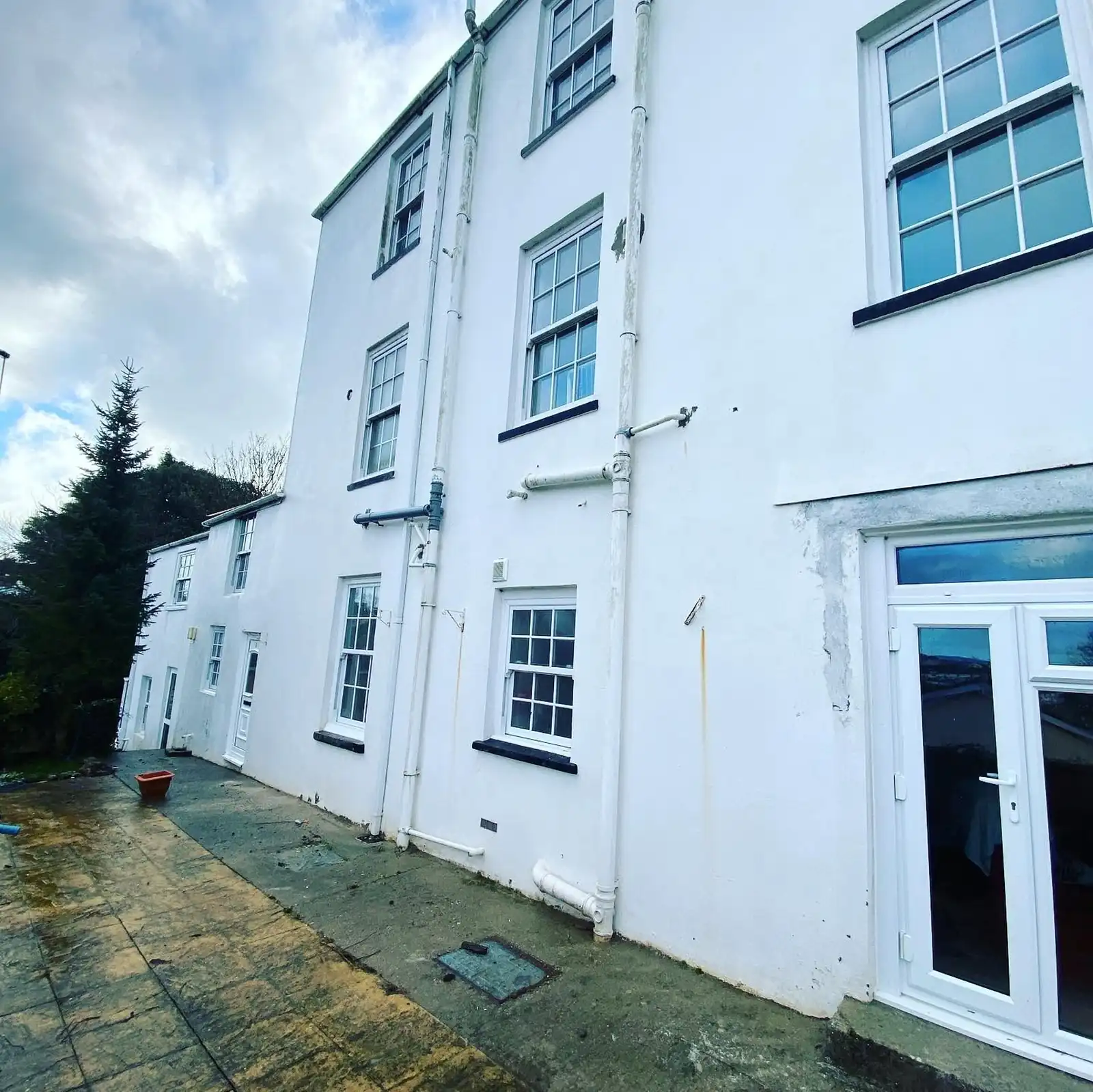
Removing growth can reveal coating defects
A cleaner surface can reveal sound underlying colour, but persistent staining may have another cause. Missing material, damp defects and worn paint need repair or repainting decisions rather than repeated washing in pursuit of an impossible uniform finish.
Cleaning can be a sensible first decision when removable growth, rather than coating failure, is spoiling the appearance. It may also make small defects easier to see, which is valuable information rather than evidence that the wash caused them. For a Dawlish elevation with mixed dark and brown marks, agree what the test indicates about each type. If a stain remains linked to a fitting or a damp detail, do not assume repeated treatment will remove its source. A dry comparison offers a fairer judgement than wet photographs taken mid-process.
Your appointment
Share how the wall changed after earlier treatment
The visit needs allowance for the trial, application, contact period and rinse. Organic marks can continue fading after treatment; no exact waiting period or final colour should be assumed.
If previous treatment is known, share when it happened and how the wall changed afterwards. That history can be more useful than assuming the next visit should be stronger or sooner. Ask when a dry review is appropriate and whether delayed fading should be photographed before further action is considered. For Dawlish maintenance, look for the pattern of returning growth rather than treating every darker patch as urgent. An isolated recurring line may warrant a condition check, while a gradual film on a shaded sound surface may simply prompt a cleaning discussion.
Before we visit
Identify entrances that must remain available
Make the intended route clear in photographs, then remove movable obstacles where practical. Explain any previous leaks or patch repairs and point out sensitive planting beside the working area before arrangements are settled.
Before the booked day, identify any route that cannot be closed because it serves another household or an essential entrance. This helps the contractor plan safe separation instead of working around unexpected foot traffic. In a Dawlish garden, include ponds, vegetable containers and outdoor pet areas in the discussion about protection and runoff. Close the openings agreed with the contractor and avoid leaving washing beside the treatment area. Do not try a household cleaner first to improve the photographs; it can complicate assessment of the original staining and coating response.
Local conditions
Seafront drift and damp north-facing walls
Some north-facing Dawlish walls stay damp after showers, while exposed elevations receive wind-blown coastal deposits. One house may contain both situations.
Open seafront exposure can make spray control difficult even when a sheltered garden feels calm. Conversely, a still north-facing wall may remain too wet or cold for a proposed application despite bright weather elsewhere in Dawlish. Ask which site conditions would trigger a postponement and whether a different time of day could provide a safer working window. The treatment specification should guide the decision, not pressure to keep a date. Following wet weather, observe whether one particular detail stays damp well beyond adjacent render and report that pattern without diagnosing it yourself.
Check your location
Rendered elevations across exposed and sheltered streets
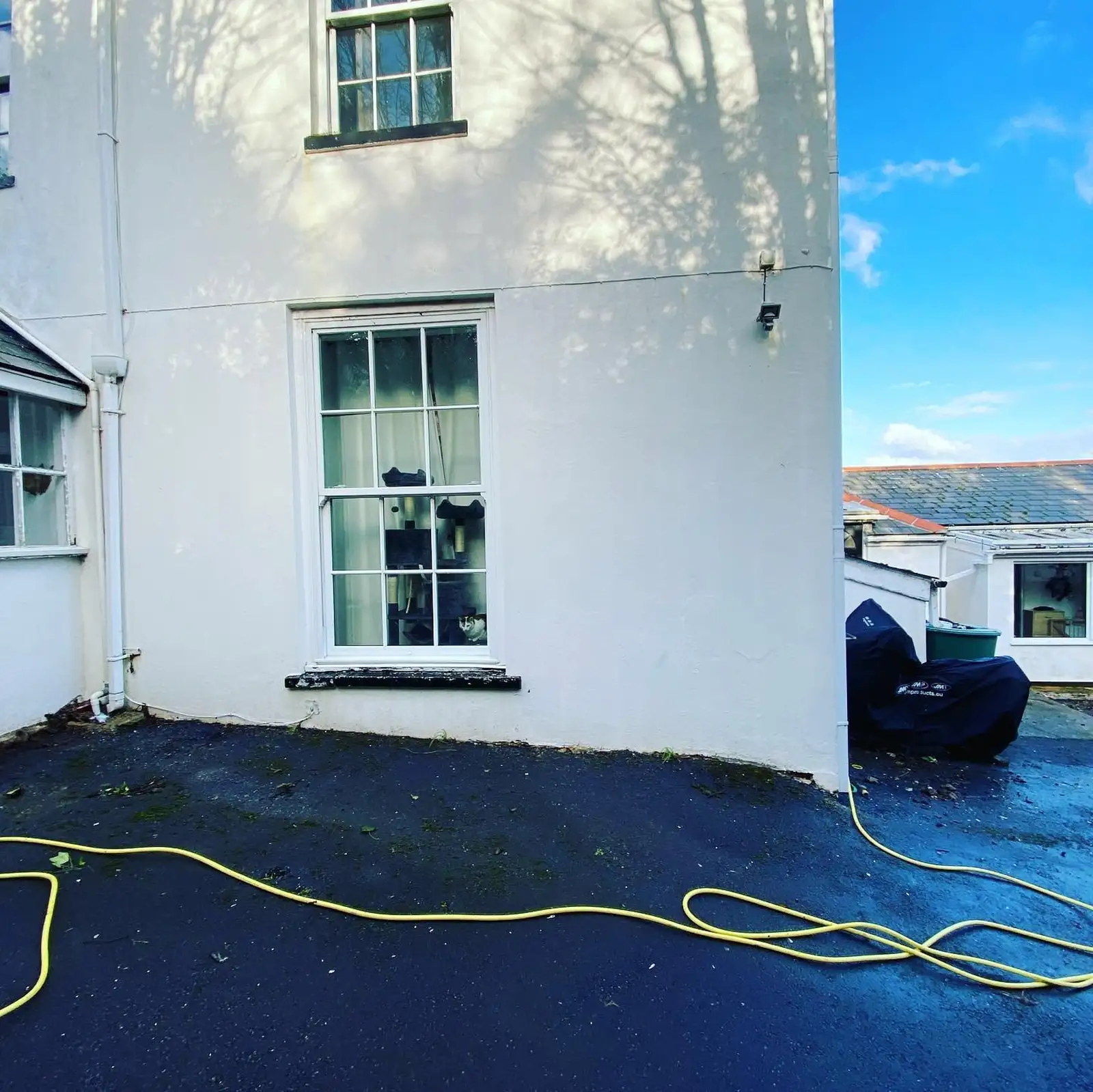
Our render-cleaning service covers Dawlish. Exposed seafront elevations and shaded inland walls can present different working conditions; include the actual stained face and steps between the road and property in photographs.
- Dawlish
Common questions
North-facing dampness and persistent black marks
Is a north-facing wall always defective?+
No. Limited drying can favour growth on otherwise sound render, though visible defects still need checking.
Will every black mark disappear?+
Not necessarily; the cause and response to a trial help establish realistic expectations.
Google reviews
What SAS customers say
★★★★★ 80+ five-star reviews
★★★★★
“I had a badly stained patio he treated the whole patio and deep cleaned it with hot water and a patio cleaning machine I was very impressed patio looks like brand new 😎”
★★★★★
“A professional, effective, timely, courteous, friendly cleaning service, provided by Simon and his small team.”