

SAS Window Cleaning · Teignmouth
Render Cleaning in Teignmouth
- ✦ 30+ years' experience
- ✦ Fully insured
- ✦ 80+ 5★ reviews
- ✦ Free quotes
Get a free quote
Fast, friendly, no-obligation pricing.
What’s included
Show deposits and access on the estuary-facing wall
- Review of contrasting elevations rather than an assumption of uniform staining.
- Identification of the finish, including coatings that may conceal earlier repairs.
- Checks for defective areas and a small trial before treating sound sections.
- Controlled soft washing and rinsing around windows, doors and projecting sills.
Distinguish salt-like residue from growth and rust
A low-pressure application of specialist treatment targets organic growth, with contact time before the gentle rinse. It avoids using a powerful jet to chase discolouration. Assessment determines whether K-Rend or silicone render is suitable and whether defects require attention before any cleaning proceeds.
Salt-like deposits, biological film and staining from metal fittings require different questions, even when they appear on the same pale wall. Ask what the trial suggests is removable and whether further identification is needed before treating an uncertain mark. For Teignmouth or Shaldon render, the proposal should also account for any later paint or protective coating over the original finish. Low pressure limits mechanical force; it does not remove the need to manage solution around balcony details, air openings and imperfect joints that could admit water.
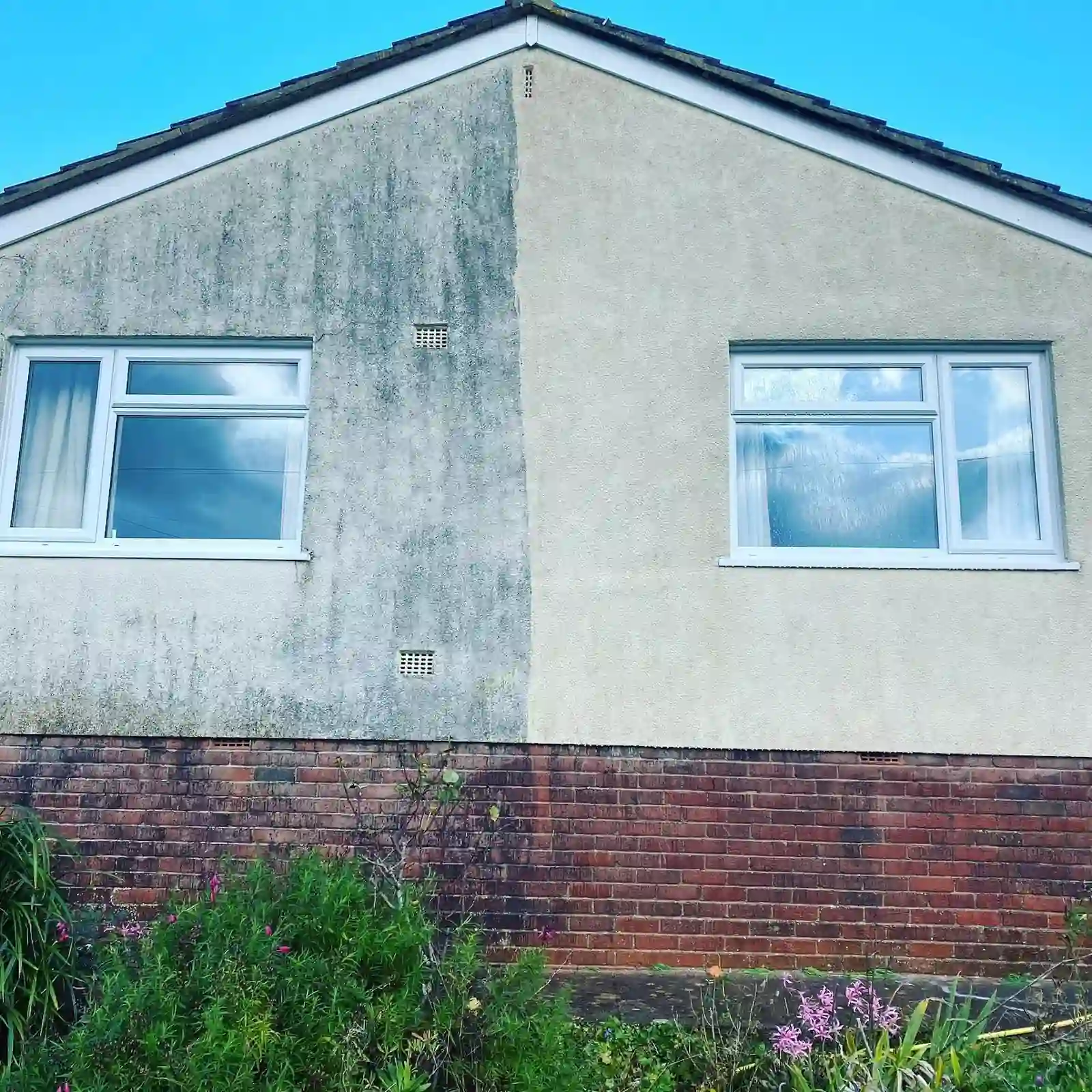
The result
A better-kept elevation without disguising weathering
Biological staining may reduce substantially, but cleaning is not a promise of fresh paint appearance. Permanent weathering, failed coatings and cracks remain separate issues; repair or redecoration may be needed to achieve the finish you have in mind.
The benefit of cleaning is a clearer, better-kept existing elevation, with growth and suitable surface dirt reduced. It is not a way of making weathered pigment new. Around Bishopsteignton, an estuary-facing wall and a shaded return may settle to different appearances after treatment because their histories differ. Agree how any remaining discolouration will be assessed once dry. A chalky or powdering coating, for example, raises a coating-condition question rather than proving that stronger cleaning is required. The target should be improvement without sacrificing sound material for an artificial match.
Your appointment
Keep a weather margin before visitors arrive
Testing and solution dwell are part of the work, not optional delays. The treated wall may continue changing afterwards, so allow for gradual improvement rather than expecting a guaranteed final shade immediately.
If you want the render presentable for visitors, explain the aim but keep a margin for weather and dry assessment. A finished application is not necessarily the best moment to judge colour. Ask when photographs will usefully show the settled surface and what residual marks should prompt a query. For Teignmouth maintenance, use the first clean as a baseline rather than accepting a promised lifespan. Check shaded returns separately from open faces, and let the actual return of growth guide a future discussion about whether further treatment is worthwhile.
Before we visit
Separate wall work from pedestrian routes
Flag shared routes and move loose belongings from the relevant approach where possible. Note fragile planting and known water-entry points, and provide any available details of the existing render system.
For a Shaldon property beside a regularly used pedestrian route, discuss separation of the work from passing people before the appointment. The same applies to neighbours using a side access or entrance below the selected wall. Explain where outdoor seating, edible planting and water features sit, including anything beyond the immediate base of the elevation. Agree what needs moving and what will be protected in place. Keep a contact reachable during treatment so a change in wind or an unexpected opening can be handled without guessing about household arrangements.
Local conditions
Changing estuary gusts affect controlled wall application
Open coastal aspects can collect wind-blown deposits, while a sheltered hillside garden may retain moisture. Actual wall exposure matters more than an estuary-wide assumption.
Across the Teign mouth, gusts can change direction around corners and carry application away from the target wall. Conditions suitable on a sheltered Bishopsteignton elevation may not suit an open face in Teignmouth at the same time. Strong sun can also dry a solution too quickly, so clear skies are not an automatic approval to proceed. Ask what rain-free conditions the chosen treatment requires and how the contractor will assess the wall on arrival. Agree the postponement process before booking rather than relying on an optimistic weather forecast alone.
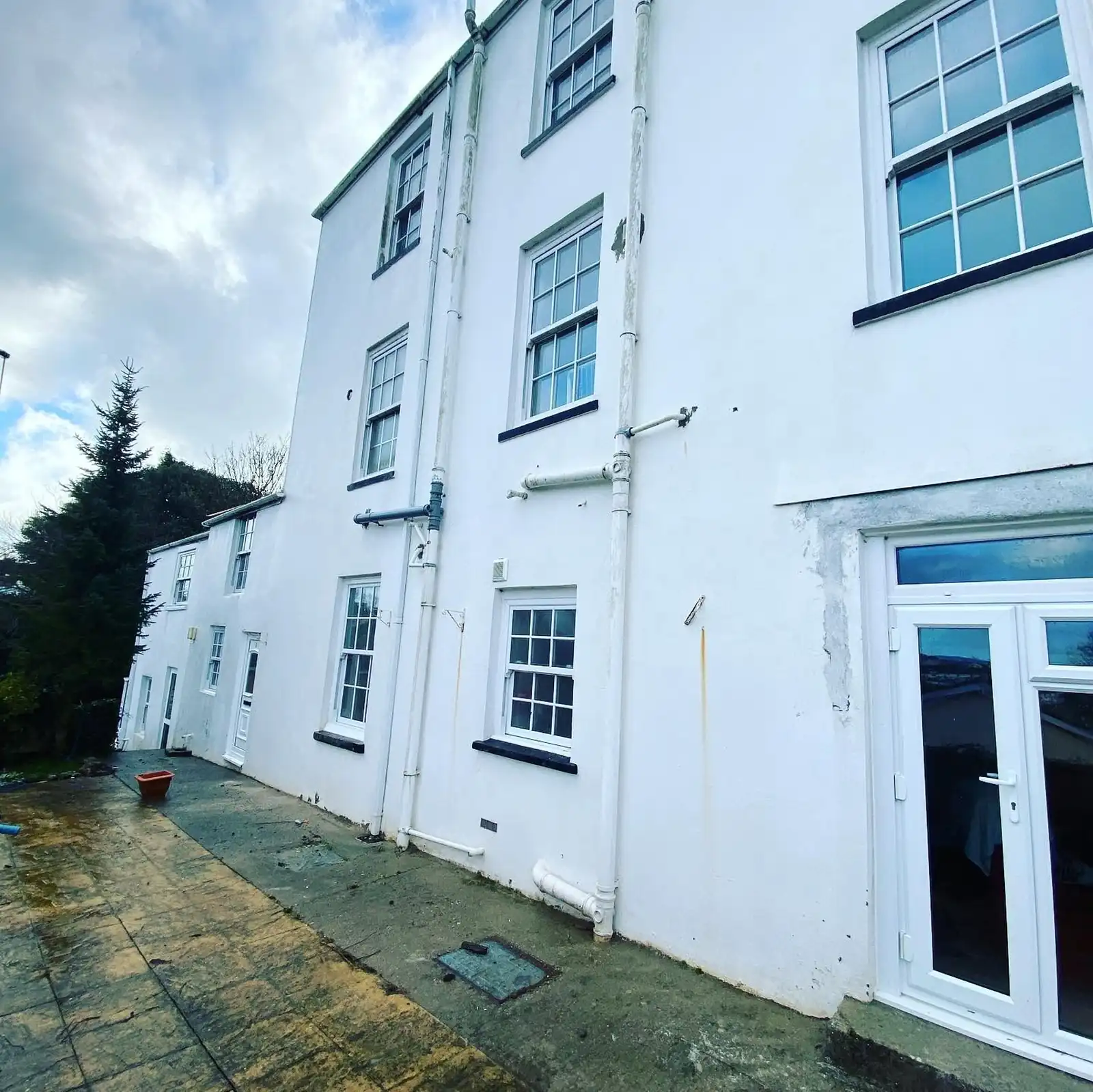
Check your location
Render coverage on both sides of the Teign mouth
We clean render in Teignmouth, Shaldon and Bishopsteignton. Seaward faces, hillside homes and sheltered garden returns vary in exposure, so an address alone cannot establish the suitable wall treatment or access plan.
- Teignmouth
- Shaldon
- Bishopsteignton
Common questions
Sea exposure and useful parking photographs
Does proximity to the sea determine the method?+
No. Finish, condition and the nature of the staining also shape the treatment choice.
Should I include parking photographs?+
Yes, especially where roadside space is limited or separated from the wall by a steep approach.
Google reviews
What SAS customers say
★★★★★ 80+ five-star reviews
★★★★★
“I had a badly stained patio he treated the whole patio and deep cleaned it with hot water and a patio cleaning machine I was very impressed patio looks like brand new 😎”
★★★★★
“A professional, effective, timely, courteous, friendly cleaning service, provided by Simon and his small team.”