

SAS Window Cleaning · Dartmouth
Roof Cleaning in Dartmouth
- ✦ 30+ years' experience
- ✦ Fully insured
- ✦ 80+ 5★ reviews
- ✦ Free quotes
Get a free quote
Fast, friendly, no-obligation pricing.
What’s included
Show the route from street to courtyard roof
- Assessment of roof condition and safe equipment positioning.
- Careful removal of roof moss through hand scraping and brushing.
- Suitable low-pressure biocide treatment after bulky growth is lifted.
- Clearance of roof gutters and gathering of cleaning debris.
Establish working positions above terraces and courtyards
There is no high-pressure jetting of tiles. A suitable soft wash follows controlled moss removal, with the covering's condition determining what is appropriate. Slipped or damaged tiles noticed during work are reported; leak investigation and repairs are not included.
On a Dartmouth roof above stepped access or a courtyard, a careful method begins with establishing workable positions and a route for collected debris. The roof material then determines which tools and any low-pressure treatment are appropriate. Avoiding high-pressure washing is important, but it does not settle every safety question. Fragile tiles, loose edges or uncertain finishes may require specialist roofing advice before cleaning. Ask how junctions and lower roof sections will be protected so removing growth from one pitch does not simply transfer the accumulation to another.
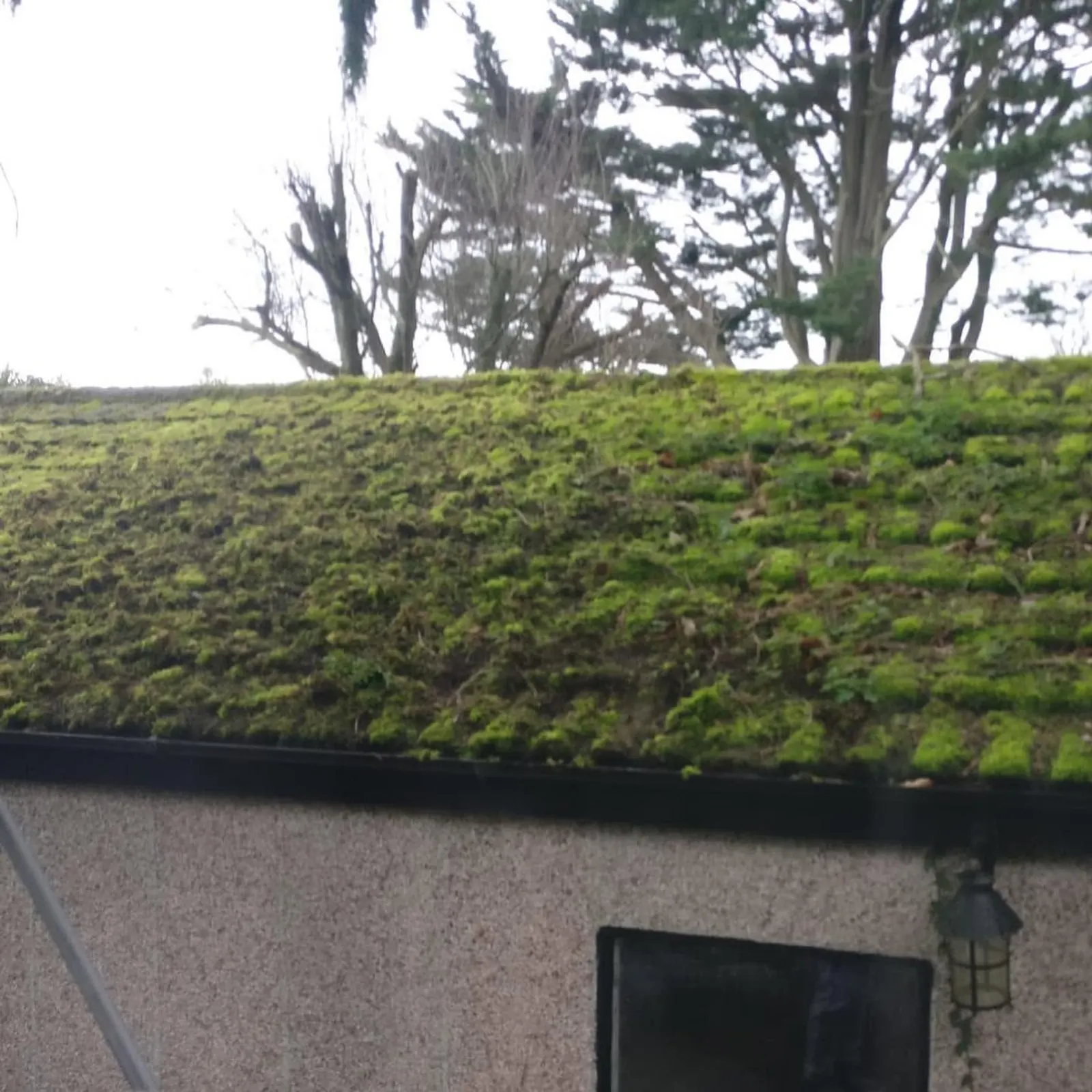
The result
A brighter roof is not evidence of soundness
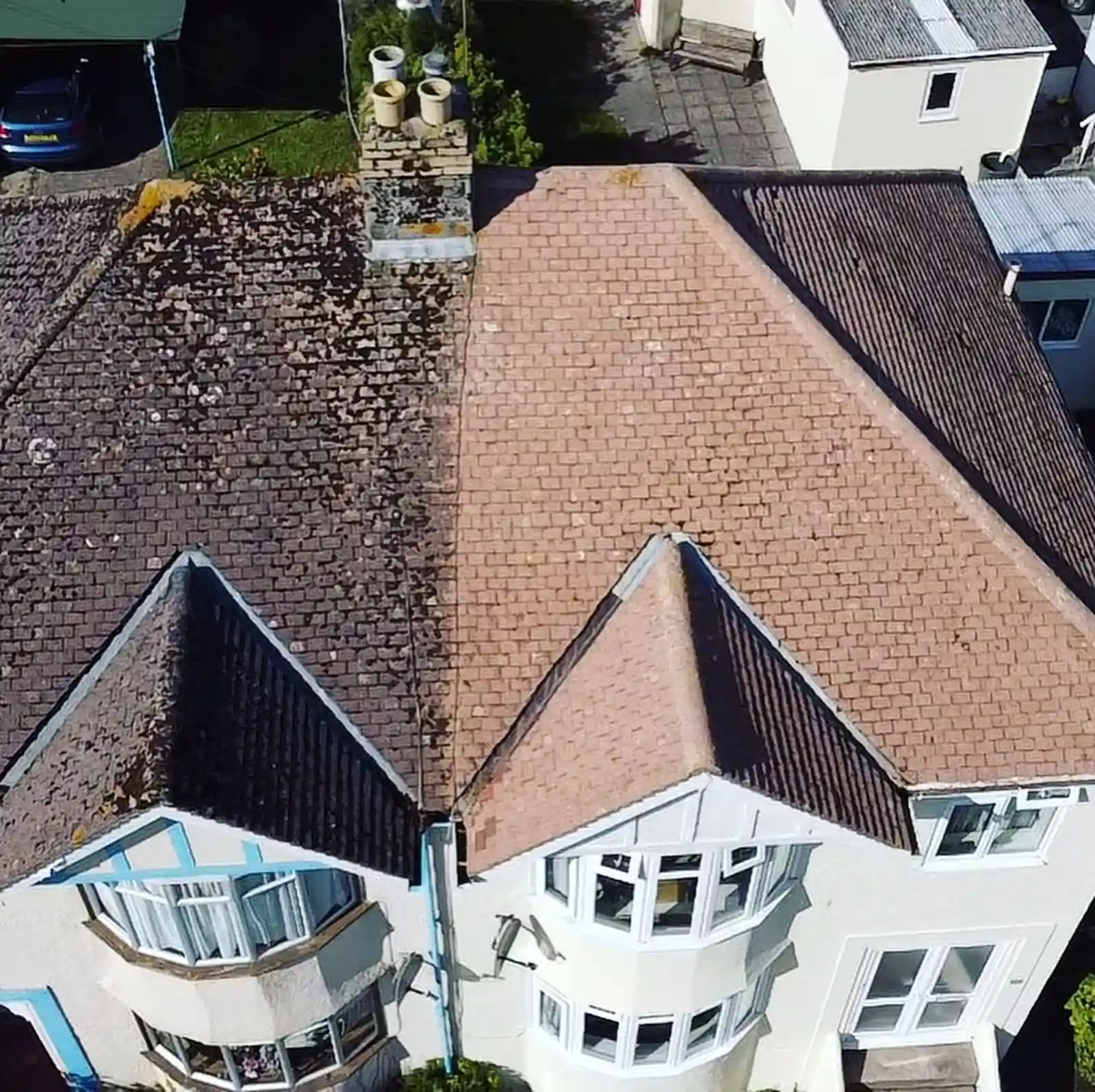
The intention is a roof with less growth and a tidier appearance. Existing patch repairs or faded tiles need not match afterwards. The proposed treatment can have a slower visible response, and no promise is made that cleaning will permanently exclude further growth.
A darker estuary-facing roof is not automatically a failing roof, and a brighter one is not proof of soundness. The practical reason to remove moss is more persuasive when clumps repeatedly gather in gutters or fall onto used steps and terraces. Cleaning can reduce that source of debris while leaving weathering and previous repairs visible. In a sheltered Dartmouth courtyard, moisture and shade may encourage recurrence, but that needs judging from the property. No cleaning result can establish that flashing is sound or repair a leak already entering the house.
Your appointment
Treat active leaks before routine roof maintenance
Scheduling depends on workable access arrangements and safe conditions. A preferred day remains provisional if either cannot be maintained.
If an active leak or storm-displaced tile prompted the enquiry, arrange the appropriate roofing response before treating the visit as routine maintenance. For suitable roofs, repeated moss shedding can justify assessment without waiting for a uniform green covering. Consider any planned repair work and avoid cleaning surfaces that are about to be disturbed. Ask when treatment effects should be reviewed, recognising that removal of bulk and changes in residual staining happen differently. Future attention should respond to actual debris and regrowth rather than a fixed claim about protection lasting a guaranteed period.
Before we visit
Use ordinary safe viewpoints for courtyard roof photos
Send ground-based photographs from secure positions and never climb onto a terrace wall or roof. Explain any restricted vehicle access and keep others informed where the proposed working area meets a shared route.
Safe preparation starts with ground-level photographs from places you would normally stand or walk. Do not climb a terrace wall, lean out of an upper window or get onto a roof to show its condition. Identify delicate items beneath the eaves and discuss suitable coverings, particularly where a small courtyard concentrates the working area. Mention water butts, ponds and nearby neighbours' outdoor spaces so runoff and treatment control can be planned. Agree how residents will use shared pedestrian routes while the cleaning area is temporarily kept clear of passing people.
Local conditions
Courtyard calm can conceal exposed upper-roof conditions
Wind exposure may differ between the courtyard and the roof above it. Rain can also make steps unsafe for equipment movements.
Dartmouth's roof-level exposure may differ sharply from conditions felt in a courtyard below. Gusts can make treatment difficult to control even where people at ground level feel sheltered. After rain, steps and terrace surfaces may also be unsuitable for handling equipment. The decision to proceed needs to consider all of those factors together with the product's instructions. Check how any postponement affects shared access arrangements, and avoid treating a clear slot in the household diary as sufficient reason to continue when weather no longer supports the agreed method.
Check your location
Roof access across estuary streets and inland villages
Roof cleaning covers Dartmouth, Blackawton and Halwell. Stepped streets, estuary exposure and inland properties need individual access checks; please include parking, shared routes and safe ground-level photographs of the selected roof sections.
- Dartmouth
- Blackawton
- Halwell
Common questions
Shared courtyards and inland roof-access assumptions
Can the equipment come through a shared courtyard?+
Describe the route and any permissions or restrictions first so a practical arrangement can be assessed.
Does an inland address mean easier roof access?+
Not necessarily; gates, parking and the building layout matter more than that distinction alone.
Google reviews
What SAS customers say
★★★★★ 80+ five-star reviews
★★★★★
“I had a badly stained patio he treated the whole patio and deep cleaned it with hot water and a patio cleaning machine I was very impressed patio looks like brand new 😎”
★★★★★
“A professional, effective, timely, courteous, friendly cleaning service, provided by Simon and his small team.”