
Case study · Chelston, Torquay
Block paving driveway restored
- ✦ 30+ years' experience
- ✦ Fully insured
- ✦ 80+ 5★ reviews
- ✦ Free quotes
Get a free quote
Fast, friendly, no-obligation pricing.
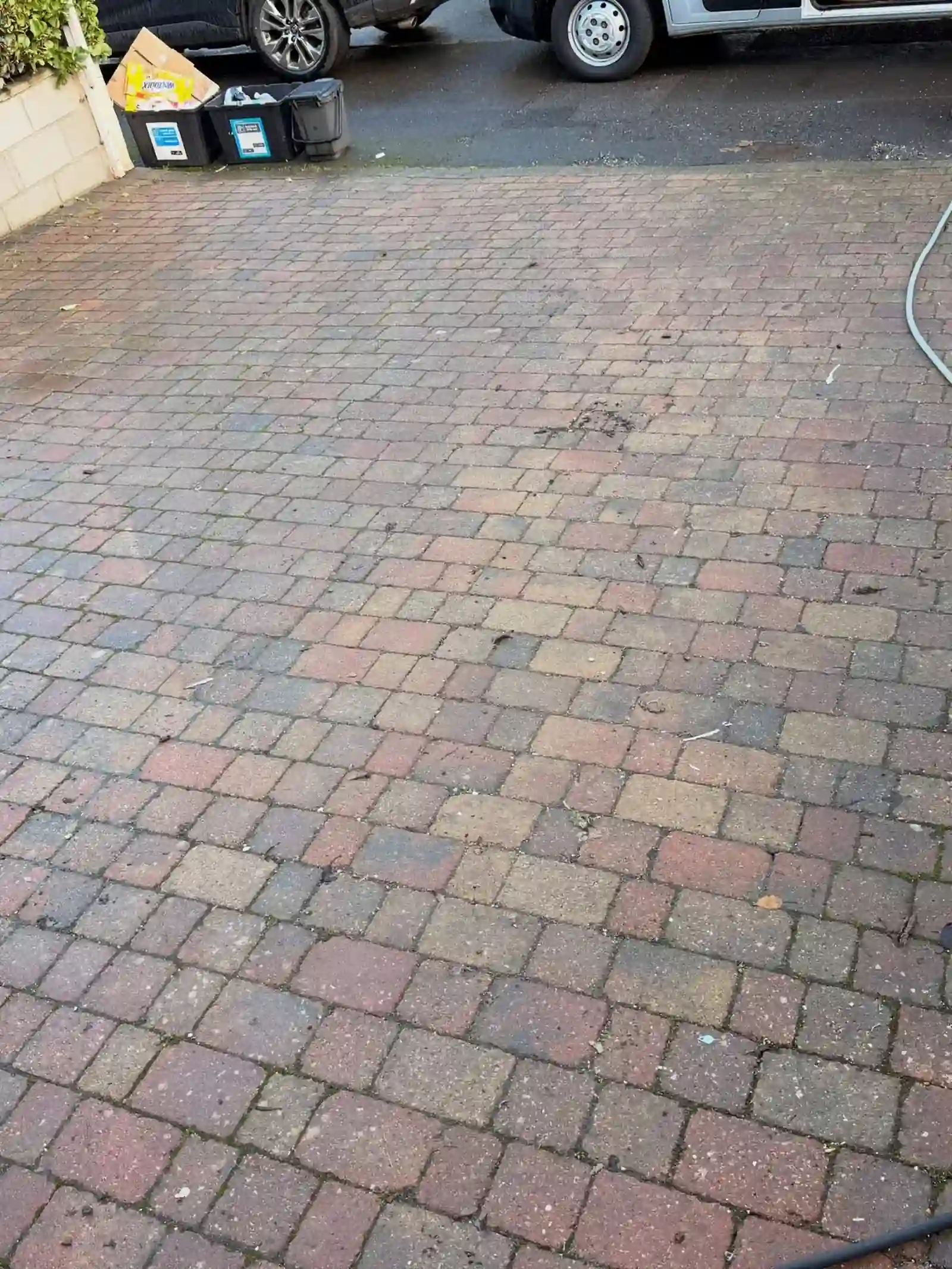
This Chelston homeowner got in touch because their block paved driveway had lost all its colour. What was once a warm mix of reds, oranges and buffs had faded to a flat, grimy brown, with algae creeping across the blocks and dark tyre marks where the cars were parked every day.
After a free visit to assess the surface, we started by treating the organic growth so it would lift cleanly. We then cleaned the whole drive edge to edge with a rotary surface cleaner, which gives an even finish without the stripy marks you get from a lance. Once rinsed down, we brushed kiln-dried sand back into the joints to lock the blocks in place and help keep weeds out.
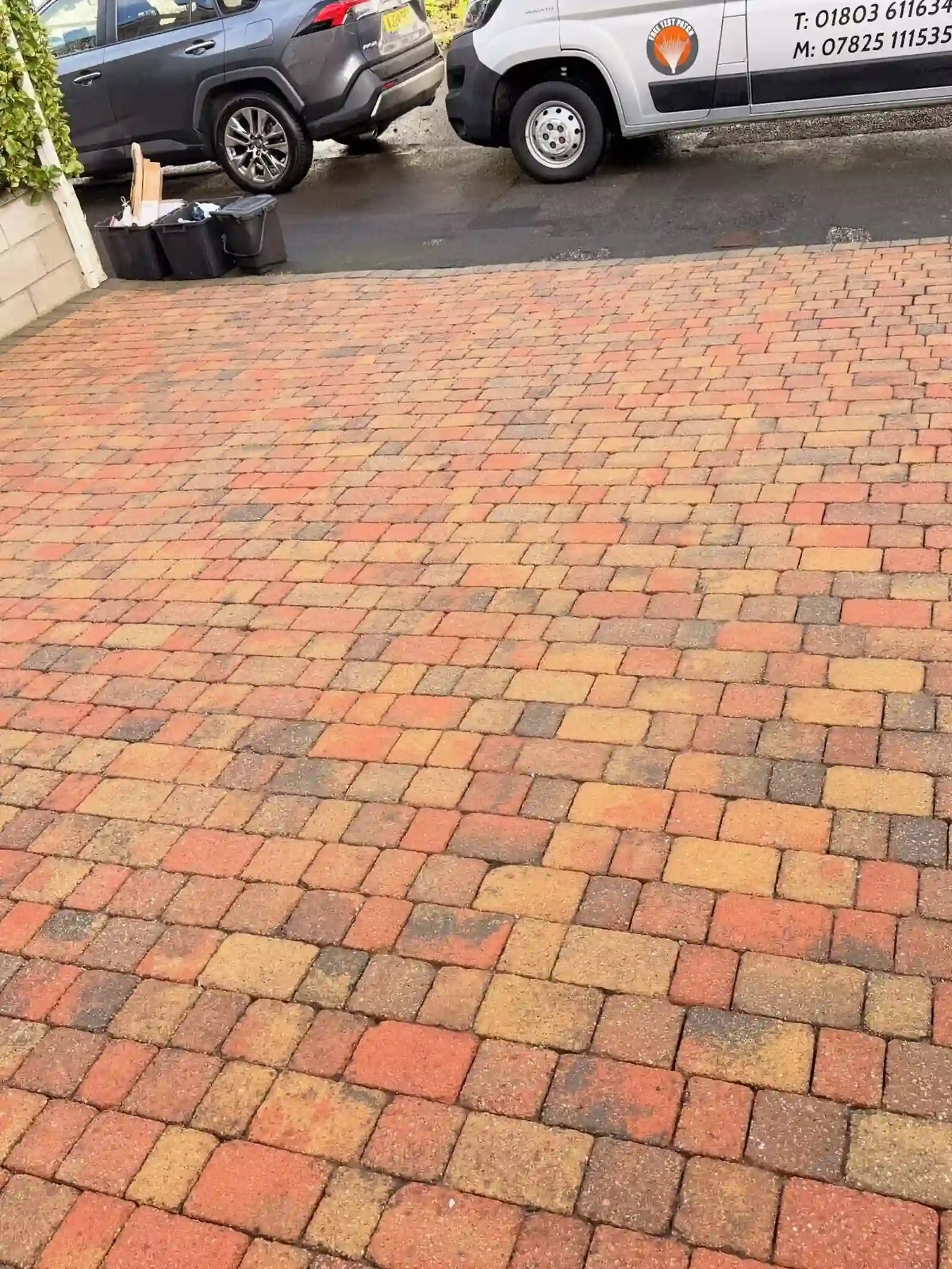
The difference speaks for itself — the original colours came straight back and the driveway looks like it has just been laid. The whole job was finished in a single day, with the area left clean and tidy for the customer.
The challenge
Years of dirt, algae and tyre marks had turned the multi-tone block paving a flat grey-brown.
Our solution
We pre-treated the organic growth, cleaned edge to edge with a rotary surface cleaner, then rinsed and re-sanded the joints.
The result
Bright reds and oranges back on show, stable blocks and a driveway that looks newly laid.
Planning a similar block paving clean
On a similar block paved driveway, cleaning can make everyday dirt and organic growth easier to manage while revealing the paving beneath. The starting question is whether the blocks and their joints are sound enough for washing. A brighter surface cannot correct settlement, rocking blocks or an unsuitable fall towards the building.
Check how the drive behaves in wet weather and note any puddles, loose edges or channels that overflow. Different marks also need different expectations: tyre residue, oil and general surface grime do not necessarily respond alike. Tell the contractor about previous sealers, repairs or attempts to remove stains before a method is selected.
Choosing a method for similar driveways
A rotary surface cleaner can provide controlled coverage across suitable open paving, whereas edges and awkward corners require more directed attention. Pressure needs to suit the condition of the blocks and joints. Increasing force to chase a stubborn mark can dislodge jointing material without resolving staining that has penetrated the surface.
Where joints need replenishing, the type of paving and existing joint material matter. Suitable dry conditions may be needed for conventional jointing sand, so washing and joint work are not automatically one continuous operation. Sealing is another decision altogether; it should not be treated as an inevitable finishing stage for every driveway.
Preparing a similar driveway enquiry
For an enquiry, provide an overall photograph, close views of troublesome marks and a view of the route from parking to the work area. Include approximate dimensions, available water, nearby drains and arrangements for moving vehicles. Mention shared entrances so access can be maintained or an alternative arrangement agreed before work begins.
Ask whether the proposed scope covers edges, rinsing, debris collection and any joint replenishment. Agree when vehicles may return rather than judging readiness by appearance alone. Repairs, stain restoration and sealing should be itemised separately if required. This guidance is for comparable paving and does not add further work or outcomes to the story above.