
SAS Window Cleaning · Our work
High-level exterior access work
- ✦ 30+ years' experience
- ✦ Fully insured
- ✦ 80+ 5★ reviews
- ✦ Free quotes
Get a free quote
Fast, friendly, no-obligation pricing.
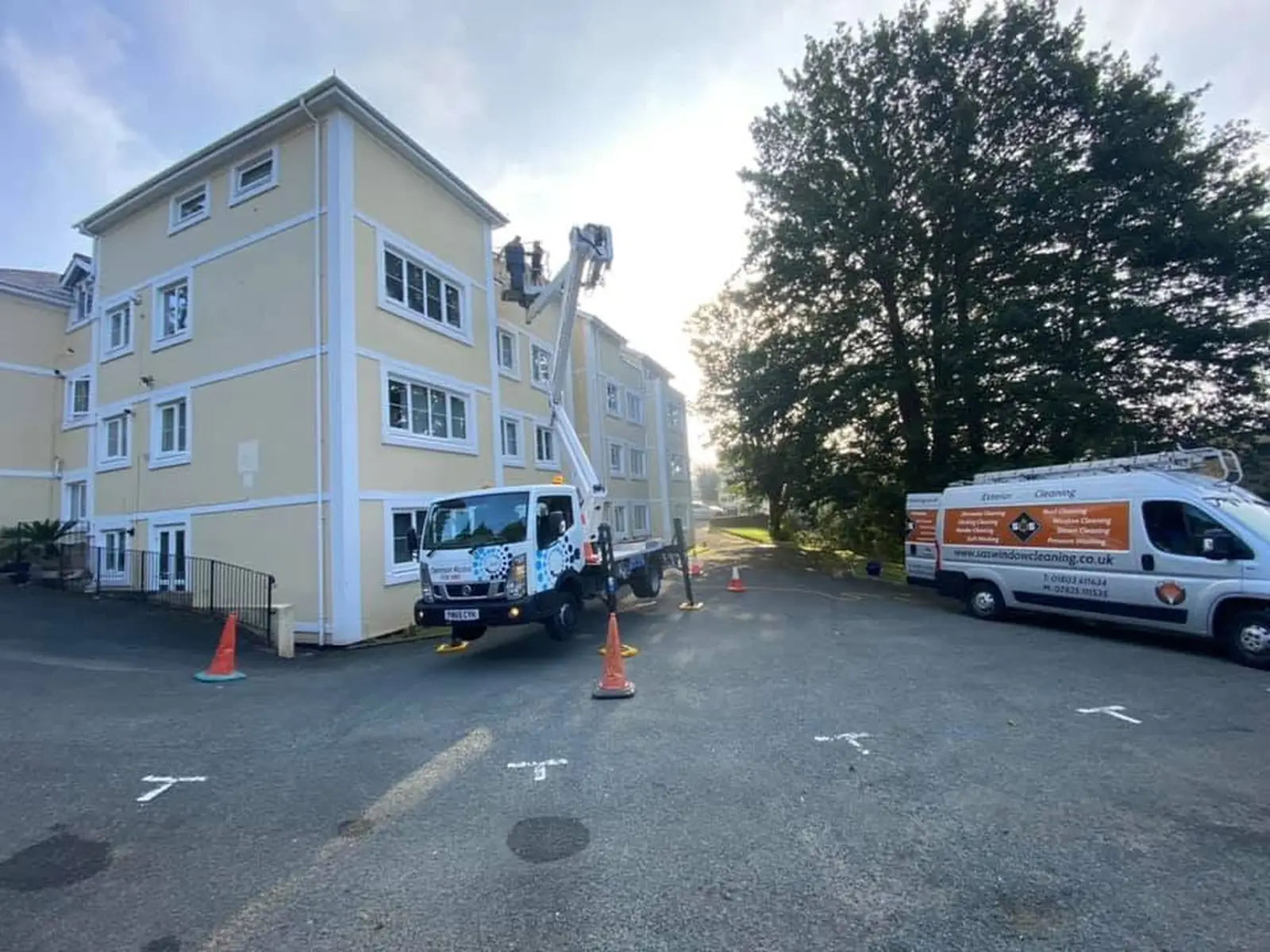
High-level exterior work is supported by a truck-mounted platform positioned beside a multi-storey building. The raised boom provides access towards the upper elevation, while stabilisers and cones define the working area below.
Access is a separate consideration from choosing a cleaning product. For this type of work, SAS typically discusses vehicle positioning, available ground space, pedestrian routes and the condition of the surfaces to be reached. The method must suit the material rather than rely on the platform alone.
This work record documents the access arrangement. It does not demonstrate which deposits were removed or how the building looked on completion. Property managers should identify the elevations required and explain normal site use so access and the proposed clean can be assessed together.
The surface
Upper exterior areas require safe reach and a managed working zone at ground level.
Our usual approach
For higher exterior cleaning, SAS normally reviews the surface, access method and site use before agreeing treatment and working boundaries.
Visible condition
A raised platform, deployed stabilisers and cones form the visible working setup; no completed cleaning result is claimed.
Planning similar high-level exterior cleaning
This access record provides no evidence of a finished cleaning transformation. It shows why reaching an elevation and deciding how to clean it are separate matters. For a similar building, first identify the surfaces and maintenance concern: glass, render, cladding and roofline components cannot be assigned the same process simply because access equipment can reach them.
High-level deposits may be difficult to assess from pavement level, so an initial plan should allow for uncertainty about material and condition. Loose finishes, defective seals and damaged components can change what is appropriate. Cleaning should not be used to investigate a suspected building defect that needs specialist attention before water or treatment is introduced.
Comparing access and cleaning methods for similar buildings
Access choices depend on the work position, available space, ground conditions and the people using the site. A platform is not automatically suitable everywhere, and ground-based equipment also has reach and control limitations. The access assessment should consider obstructions and the working envelope rather than looking only at the height of the surface to be cleaned.
Once safe reach is established, the cleaning method still needs to match the substrate. Controlled application, splash protection and runoff collection may be relevant depending on the task. Ask how people, parked vehicles and adjacent property will be separated from the work. Weather and other site conditions can affect whether a proposed operation can proceed safely.
Preparing a similar high-level work enquiry
An enquiry should include whole-building views, the elevations required and photographs of possible equipment positions. Explain deliveries, entrances, pedestrian routes and any shared access. Mention overhead obstructions and restrictions imposed by site management. Do not assume that the space visible beside a building is available for equipment without checking who controls it and how it is normally used.
Confirm responsibility for permissions, temporary access arrangements and communicating restrictions to occupants. Specify the surfaces included and any exclusions such as repairs, inaccessible recesses or unrelated elevations. Ask how completion will be documented for the agreed cleaning task. None of this guidance establishes that cleaning occurred, or that a particular result followed, in the access image accompanying this record.
How we approach this type of job
High-level exterior cleaning involves site planning as well as choosing a surface method. A platform or other access system must suit the height, ground conditions and working area, with a safe perimeter that accounts for pedestrians, vehicles and entrances. The equipment alone does not establish that the surface is suitable to clean or that access is feasible. Before proposing work, assess the building material, required elevations, positioning space and day-to-day site use. Agree how the work zone will be managed and whether access equipment can be deployed without obstructing essential routes. The cleaning method should be compatible with the surface and any nearby openings. A site assessment may be necessary to confirm practical arrangements.
Is your property similar?
Hard-to-reach staining, visible growth beneath upper windows, or dirty cladding across several storeys may require a planned high-level clean. Restricted ground space, busy entrances, overhead obstacles and pedestrian routes are important signs that access needs early assessment. Describe the elevations and site constraints. We can review practical options and provide a free, no-obligation quote after considering the site details.