

SAS Window Cleaning · Our work
Streaked render cleaned
- ✦ 30+ years' experience
- ✦ Fully insured
- ✦ 80+ 5★ reviews
- ✦ Free quotes
Get a free quote
Fast, friendly, no-obligation pricing.
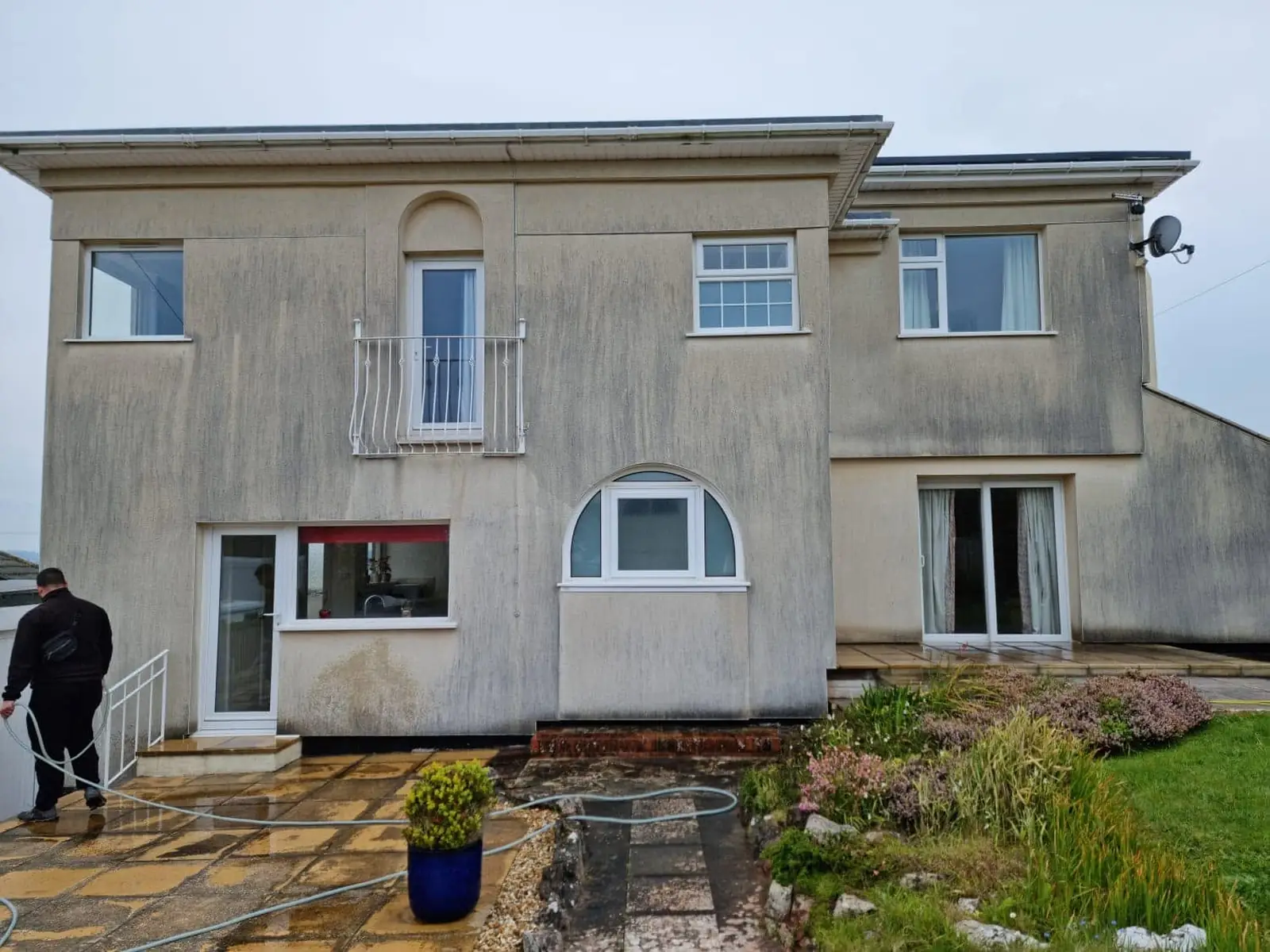
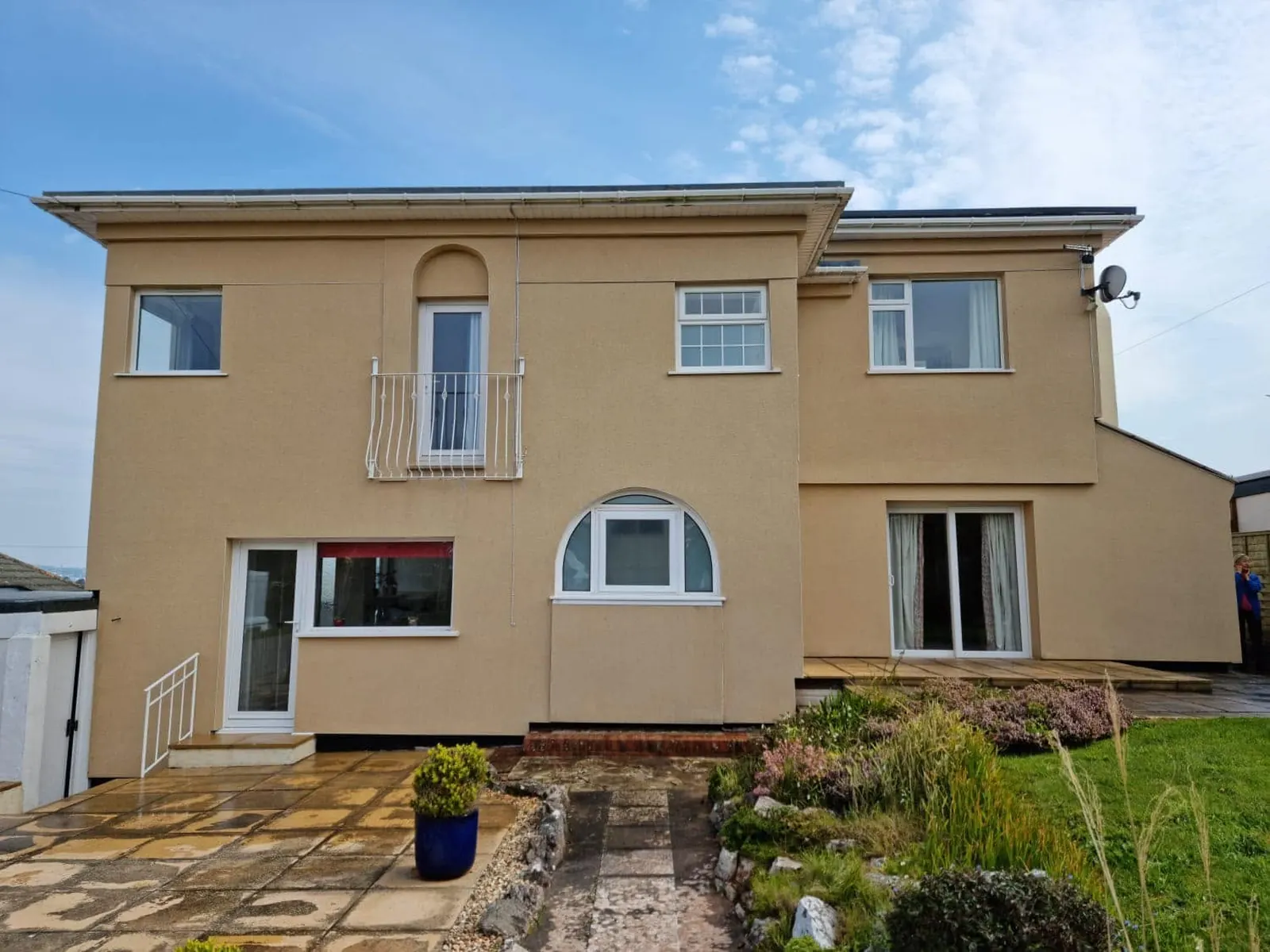
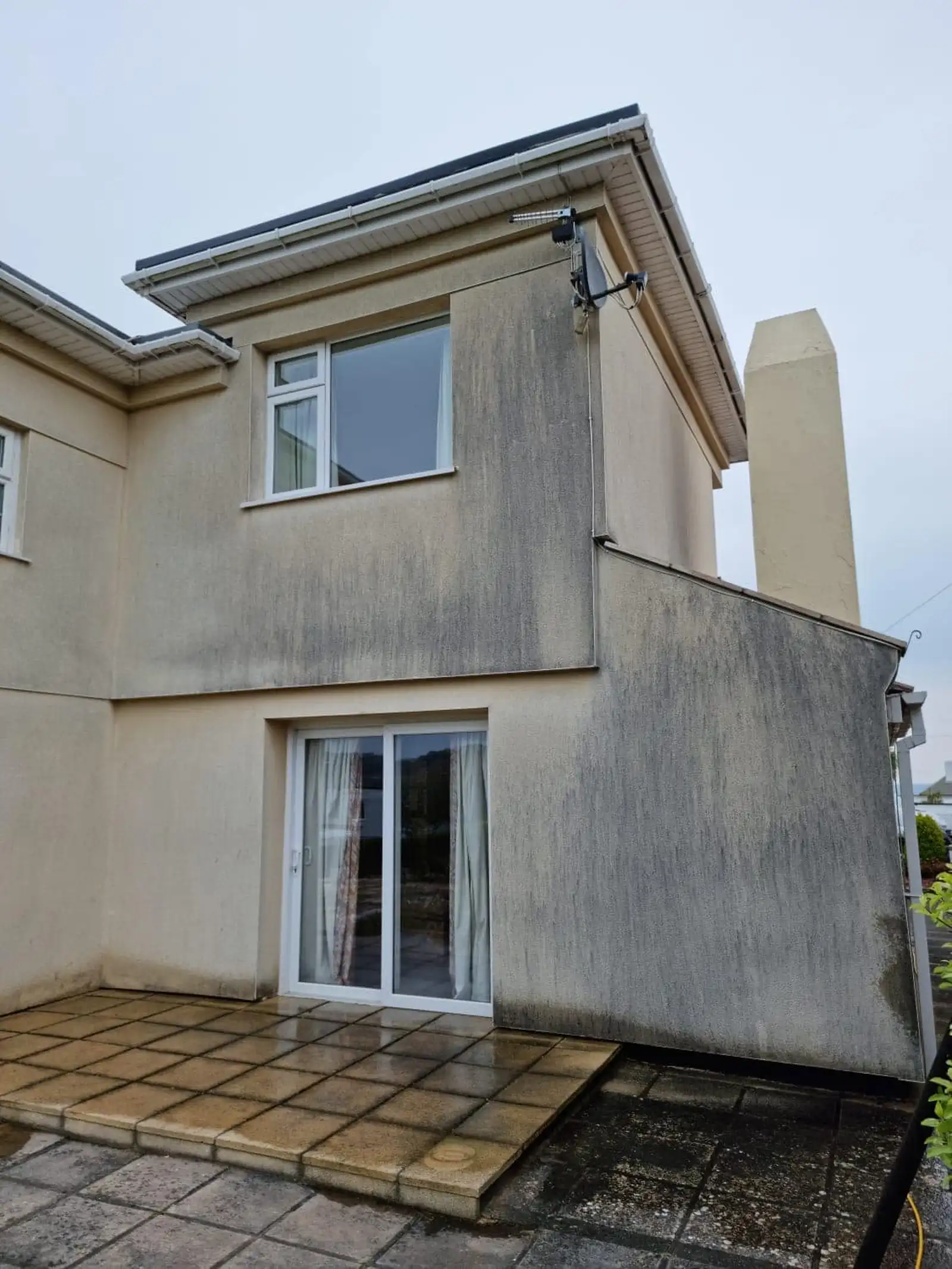
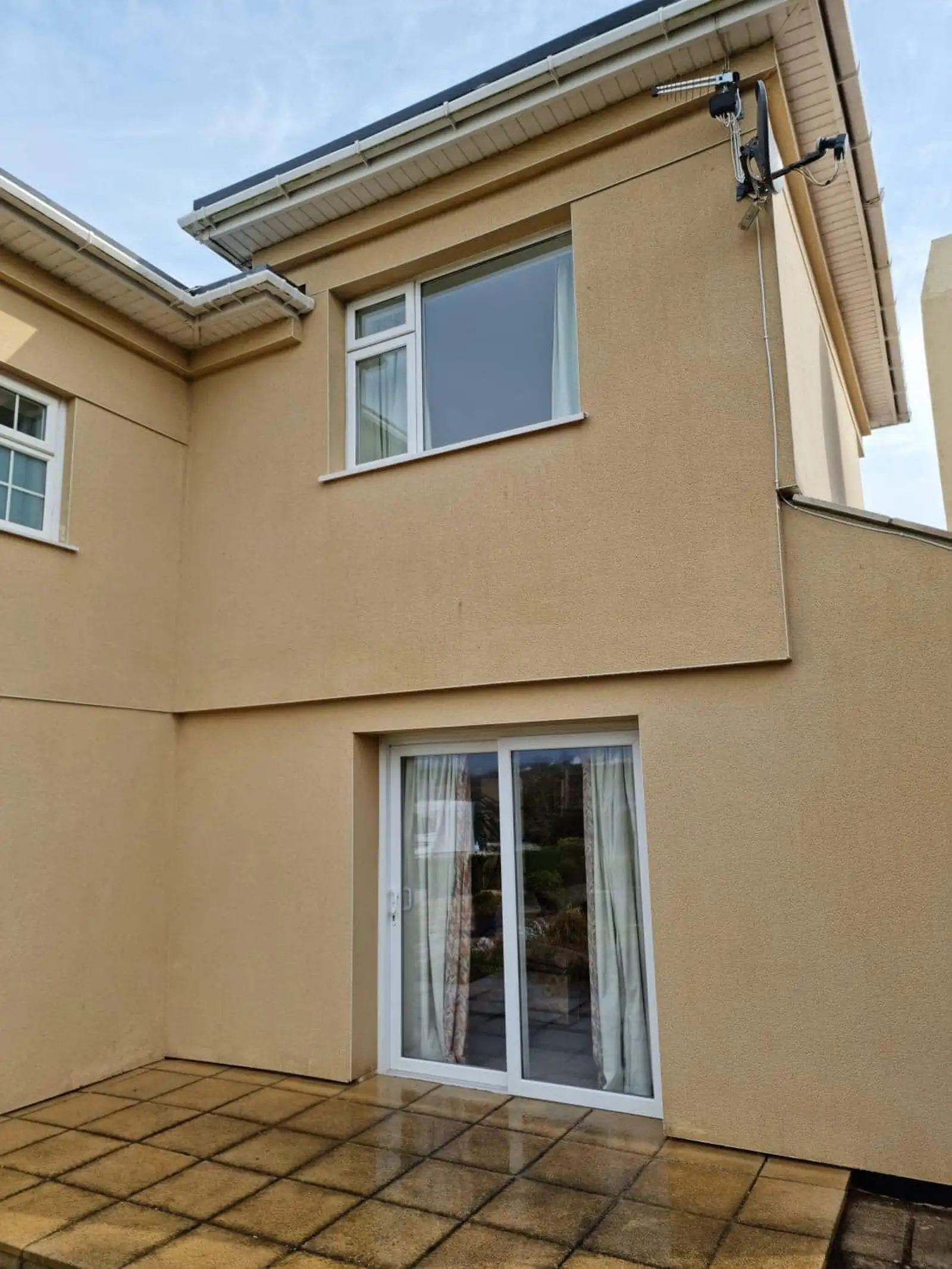
Dark streaks have been lifted from the rendered elevations, improving the finish around the upper windows, balcony and patio doors. The original warm wall colour is more apparent once the grey deposits no longer dominate the frontage.
SAS generally uses low-pressure soft washing for suitable render rather than treating walls like hard paving. We identify the finish, check for cracks and trial an appropriate treatment before working across the elevation. Openings and adjoining surfaces need protection and careful rinsing.
The cleaning target is removable surface staining. Cracked render, a failed coating or discolouration within the finish may need other attention. No particular product, render brand or length of protection is attributed to this work.
The surface
Grey and black vertical marks covered the pale render below the eaves and around upper windows.
Our usual approach
Our usual render approach is a finish-appropriate low-pressure soft wash, following condition checks and a discreet treatment test.
Visible condition
The warm render tone is clearer and the extensive vertical staining is substantially reduced.
Planning a similar render clean
Cleaning rendered walls is mainly about distinguishing removable deposits from faults in the finish. Dark streaks can have several explanations, so their appearance alone is not enough to specify a treatment. A sensible assessment considers whether the concern is surface growth, water tracking, coating deterioration or another issue that cleaning may not resolve.
Identify the render or coating if records are available, and mention any previous painting, patch repairs or cleaning attempts. Cracks, hollow areas and lifting coatings need particular attention before water is introduced. Windows, vents and service penetrations also matter because an apparently continuous wall may contain vulnerable openings or junctions around the area being considered.
Comparing approaches for similar rendered walls
Low-pressure application can suit some render-cleaning tasks, but low pressure does not by itself make every product or process appropriate. Compatibility, controlled application and a discreet test remain important. Treating a rendered elevation like paving risks damaging its finish, while repeated washing cannot repair a coating that is already separating from the substrate.
A proposed method should explain how adjacent glass, metalwork, painted surfaces and plants will be protected. Runoff needs a route that avoids spreading residues onto unsuitable materials. Some marks may be reduced rather than removed completely, and the dry finish should be considered before deciding whether any further attention is justified following the initial clean.
Preparing a similar render enquiry
For an enquiry, send a whole-elevation photograph and closer views of streaking, cracks and repaired patches. Include side access, extensions and obstacles beneath the walls. State any known product information or maintenance requirements. Explain whether access would affect neighbours or a shared route so this can be considered alongside the surface assessment from the outset.
Ask which elevations and adjoining features are included, what protection is planned and how limitations will be recorded. Render repair, repainting and correction of moisture sources are not ordinary cleaning tasks. This advice concerns similar rendered surfaces only; it does not attribute another treatment, product or investigation to the house in the accompanying work record.
How we approach this type of job
Rendered walls need a different approach from hard paving: forceful washing may mark a finish or drive water into defects. Start by identifying the render type where possible and inspecting for cracks, loose areas, failed coatings and vulnerable openings. Streaks may be surface deposits, but discolouration within the finish will not necessarily wash away. A suitable low-pressure soft-wash method may be considered after a discreet test, with the treatment chosen for the material and staining. Windows, vents, doors, plants and adjacent surfaces should be protected as appropriate, and rinsing managed carefully. Work in manageable sections helps keep application consistent. Any damaged render or defective seal should be addressed separately rather than masked by cleaning.
Is your property similar?
Persistent green or grey streaks, patchy dark marks below eaves, or soiling around windows can indicate that render needs attention. Cracks, flaking coating or damp patches should also be mentioned, as washing may not address underlying defects. Share what you have noticed and which elevations concern you. We can discuss suitability and provide a free, no-obligation quote after reviewing the details.