

Case study · Watcombe, Torquay
Moss-covered roof cleaned
- ✦ 30+ years' experience
- ✦ Fully insured
- ✦ 80+ 5★ reviews
- ✦ Free quotes
Get a free quote
Fast, friendly, no-obligation pricing.
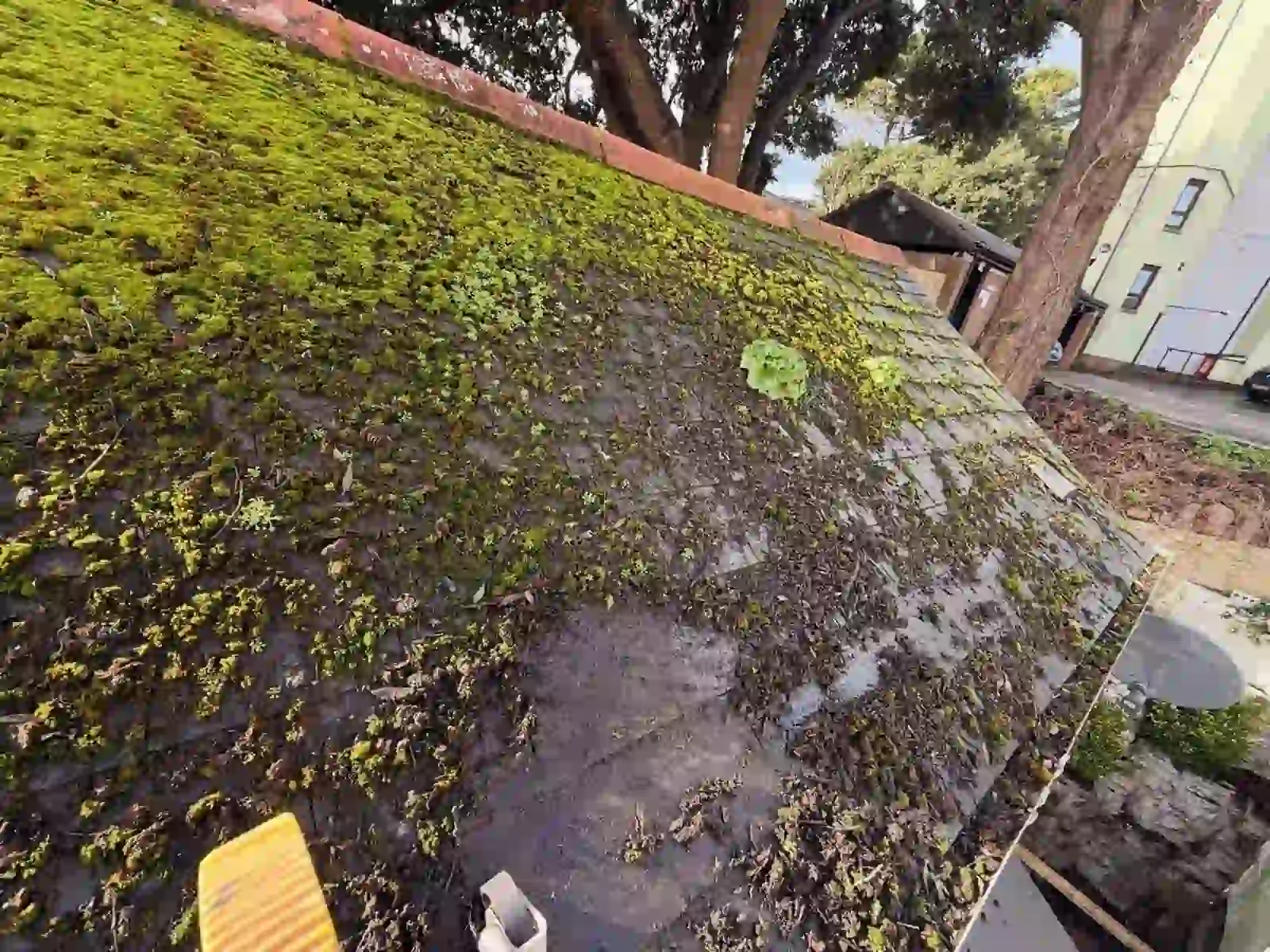
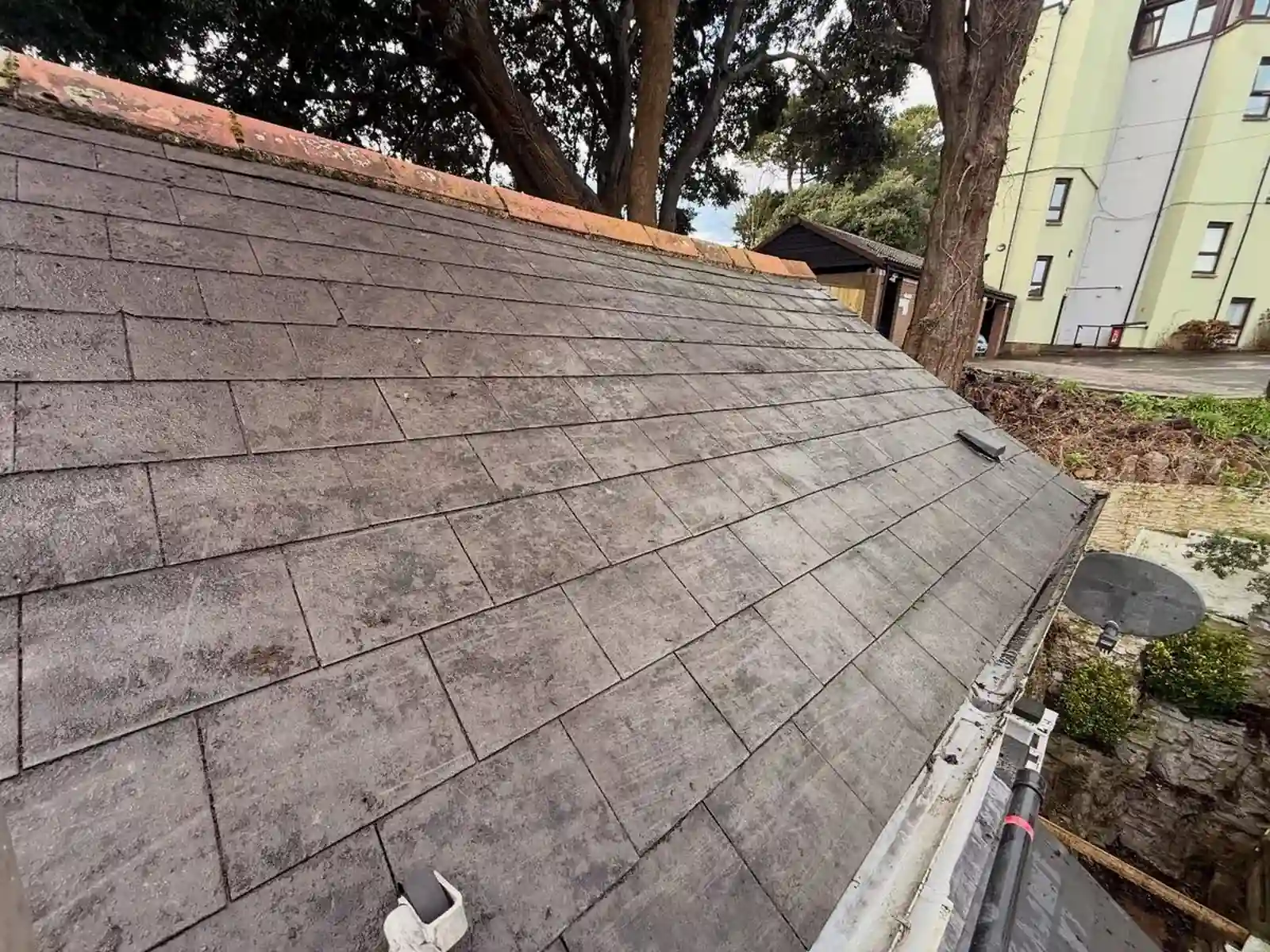
This Watcombe property sits beneath mature trees, which meant shade, leaves and damp — the perfect conditions for moss. Over time a thick carpet had built up across the whole roof slope, and it was starting to wash down into the gutters and block them.
We worked safely along the roof, scraping and brushing the moss off by hand rather than using high pressure on the slates. A soft wash treatment was then applied to kill off any remaining spores, and to finish we emptied the gutters of all the debris so rainwater could flow freely again.
The customer was left with a clean, moss-free roof, clear gutters and peace of mind that regrowth will be kept at bay for a long time to come.
The challenge
Trees overhanging the property had let thick moss take hold across the whole roof slope.
Our solution
Moss scraped and brushed off by hand, a soft wash treatment applied, and gutters emptied at the end.
The result
A clean, moss-free roof, free-flowing gutters and treatment to keep regrowth at bay.
Planning a similar moss-affected roof clean
When moss collects on a roof, loose material can also make its way towards the rainwater system. A useful enquiry therefore considers both the covering and where debris may travel. Cleaning is a maintenance option for suitable materials, not a substitute for investigating leaks, failed fixings or other defects that require a roofer.
Before discussing removal, identify any known fragile areas, displaced pieces or deteriorating mortar. Surrounding trees and shade may help explain where growth recurs, but they do not determine the method on their own. The actual roof material, surface condition and safe access arrangements should guide whether cleaning is appropriate and how it is approached.
Weighing methods for similar moss growth
Careful mechanical removal can reduce bulky growth without treating the covering like a hardstanding. Tools must suit the profile and condition of the material, and access should avoid unnecessary loading of fragile areas. High pressure is not a default answer simply because moss is thick or because the roof looks heavily discoloured from below.
A suitable follow-on treatment may be considered separately from physical removal. Its purpose, compatibility and likely visual progression should be explained before agreement. Debris containment matters throughout: directing loose moss into gutters without a collection plan merely transfers the maintenance issue. Ask how adjacent roofs, paths and planted areas would be kept clear of falling material.
Preparing a similar roof maintenance enquiry
Useful enquiry information includes broad views of the slopes, the gutter line and the ground around the building. State whether rainwater feeds a storage container, whether access crosses neighbouring land and whether there are delicate structures below. Take photographs from safe ground positions; there is no need to climb onto a roof for a quotation.
Confirm whether gutter clearance, downpipe checks and disposal are included or require separate arrangements. Tile replacement, leak tracing and tree work are distinct tasks and should not be assumed. Discuss practical aftercare without expecting growth never to recur. Nothing in this general checklist extends the methods or results already described in the accompanying case study.