

SAS Window Cleaning · Our work
Moss cleared from stone paving
- ✦ 30+ years' experience
- ✦ Fully insured
- ✦ 80+ 5★ reviews
- ✦ Free quotes
Get a free quote
Fast, friendly, no-obligation pricing.
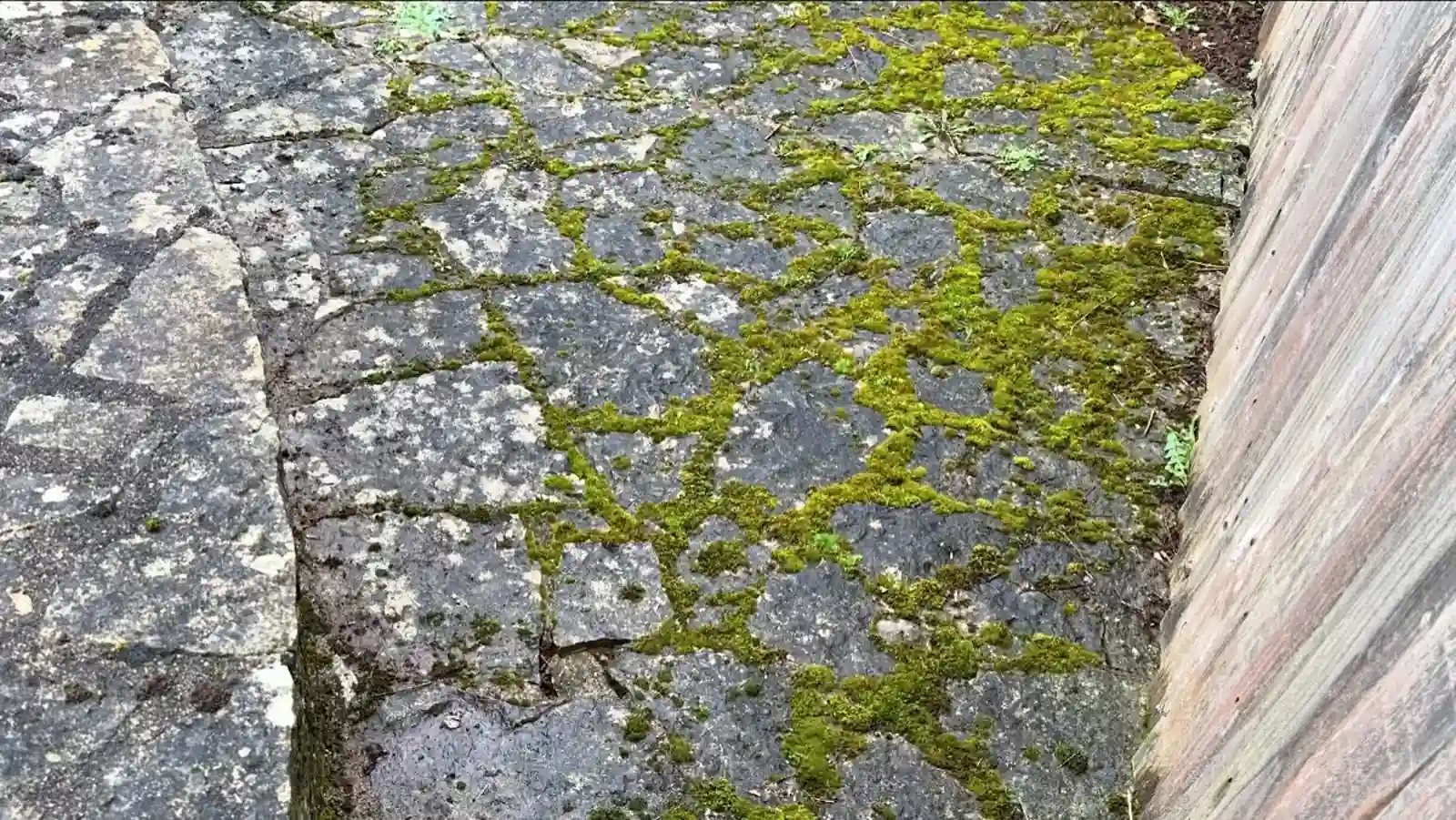
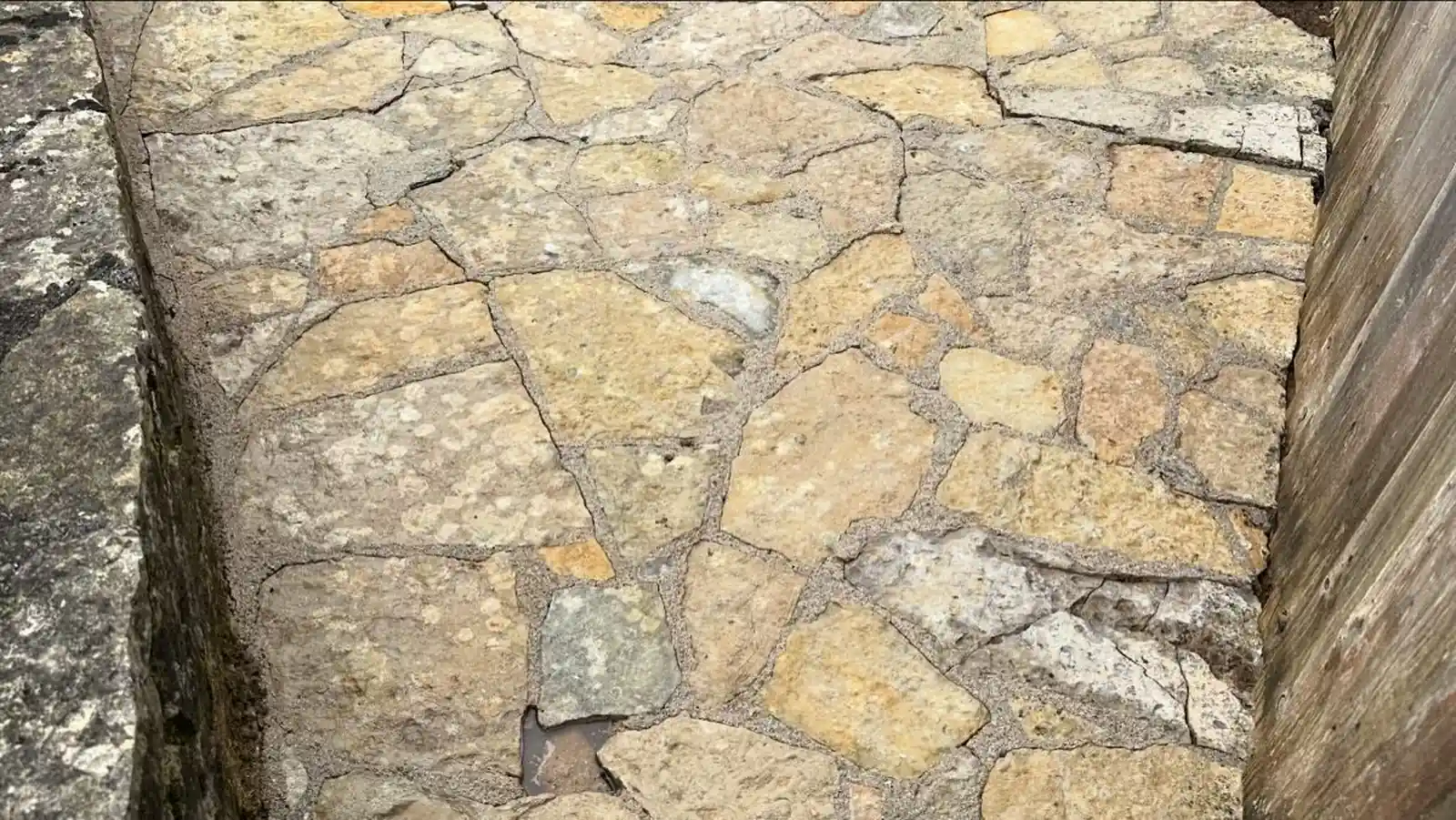
Moss-covered paving has been uncovered along a narrow passage between a raised border and timber fence. Clearing the attached growth restores definition to the irregular stone edges and reveals colour that had been hidden beneath the surface build-up.
Older stone paths need a careful starting assessment. SAS typically checks for soft edges, loose pieces and weak pointing before testing the selected cleaning method. Narrow passages also require a practical rinsing route so debris is not simply moved to the far end.
The visible improvement concerns the stone surface. It does not establish that pointing was renewed or a sealant applied. Cleaning can expose existing wear and natural variation; seeking a completely uniform colour on mixed stone risks taking the treatment too far.
The surface
Green growth and dark deposits covered irregular paving beside a timber fence.
Our usual approach
We usually assess stone and pointing first, then select restrained washing and suitable growth treatment for the sound areas.
Visible condition
Yellow, brown and grey stone tones are visible, with the heavy moss removed from the passage.
Planning a similar stone path clean
Stone paths often contain varied colours, textures and degrees of wear within a small area. Removing moss and dirt can make that variation more visible rather than producing an identical finish throughout. The useful aim is an appropriate clean of the existing surface, not grinding away its character in pursuit of a uniform colour.
Assess the stone and the material between it before selecting equipment. Soft edges, loose pieces and weak pointing can react poorly to forceful washing. In narrow passages, also look at fence bases, raised borders and door thresholds. There may be little room to direct rinse water without affecting another surface or sending debris towards an entrance.
Selecting methods for similar mixed stone
Restrained washing can be suitable for sound areas, with a test helping to show how the stone responds. A method appropriate for a robust block may be too harsh for an adjacent softer piece. Concentrating a jet on joints or fragile edges can remove material that cleaning cannot replace, so pressure alone is not the measure of effectiveness.
Any proposed growth treatment needs to suit the identified stone and nearby materials. Avoid assuming that a household stain remover or acidic product is acceptable across mixed paving. Moss removal may uncover pre-existing joint defects, and that possibility should be discussed before starting rather than treating every newly visible gap as a cleaning outcome.
Preparing a similar passageway enquiry
Provide photographs along the whole passage and close views of joints, loose sections and changes in level. Include the entrance width, steps and the nearest drainage point. Mention whether the route is shared or the only way into a garden, as temporary access arrangements may be necessary while washing and debris collection are taking place.
Confirm how sediment will be collected and which adjoining surfaces will receive a final rinse. Repointing, resetting stones, improving drainage and applying sealers should be considered separately. Ask what differences may remain once the stone has dried. These recommendations are for planning comparable stone-path work and do not imply additional repairs or treatments in the example above.
How we approach this type of job
Stone paths vary in hardness, texture and joint construction, so a method suitable for one paving type may be too aggressive for another. Moss can obscure irregular edges and make a narrow passage slippery, but cleaning should not loosen soft stone or weak pointing. Begin by checking stability and identifying vulnerable boundaries. A contractor can test a discreet patch, then select a restrained wash and suitable growth treatment for the sound areas. In a confined walkway, consider where rinse water and debris will travel; clearing only the centre may leave deposits at the far end or along fence edges. Allow the path to dry before judging its natural colour and remaining marks.
Is your property similar?
Moss between stones, slippery patches after rain, or a path whose edges and pattern are hidden by growth are signs cleaning may help. Loose stones, crumbling pointing or water that pools along the route need to be raised before work is considered. Describe the path and any access limits. Ask us for a free, no-obligation quote and a suitable method discussion.