

SAS Window Cleaning · Dartington
Render Cleaning in Dartington
- ✦ 30+ years' experience
- ✦ Fully insured
- ✦ 80+ 5★ reviews
- ✦ Free quotes
Get a free quote
Fast, friendly, no-obligation pricing.
What’s included
Show the wall behind close garden planting
- Discussion of persistent staining alongside garden shelter and planting proximity.
- Identification of the existing finish, including any painted or repaired sections.
- Checks for surface failure followed by a suitable small-area test.
- Low-pressure treatment and gentle rinsing of the wall and adjacent fittings.
Confirm growth and finish before selecting treatment
A specialist soft-wash solution treats organic growth while avoiding aggressive pressure on the render. It is given dwell time before rinsing, rather than being immediately blasted away. K-Rend and silicone systems need assessment for suitability, with particular attention to their condition and any later alteration.
A biological cleaner should be selected for the wall finish, not simply because leaves and shade suggest algae. Ask what evidence supports that identification and how the trial will assess any other deposits. In Dartington, a later painted layer or water repellent may affect the response even where the original render specification is known. Low-pressure delivery should avoid forcing liquid around fixtures or into openings. If a mark remains, investigate whether it is embedded staining or coating deterioration before increasing the treatment in pursuit of a uniform-looking test area.
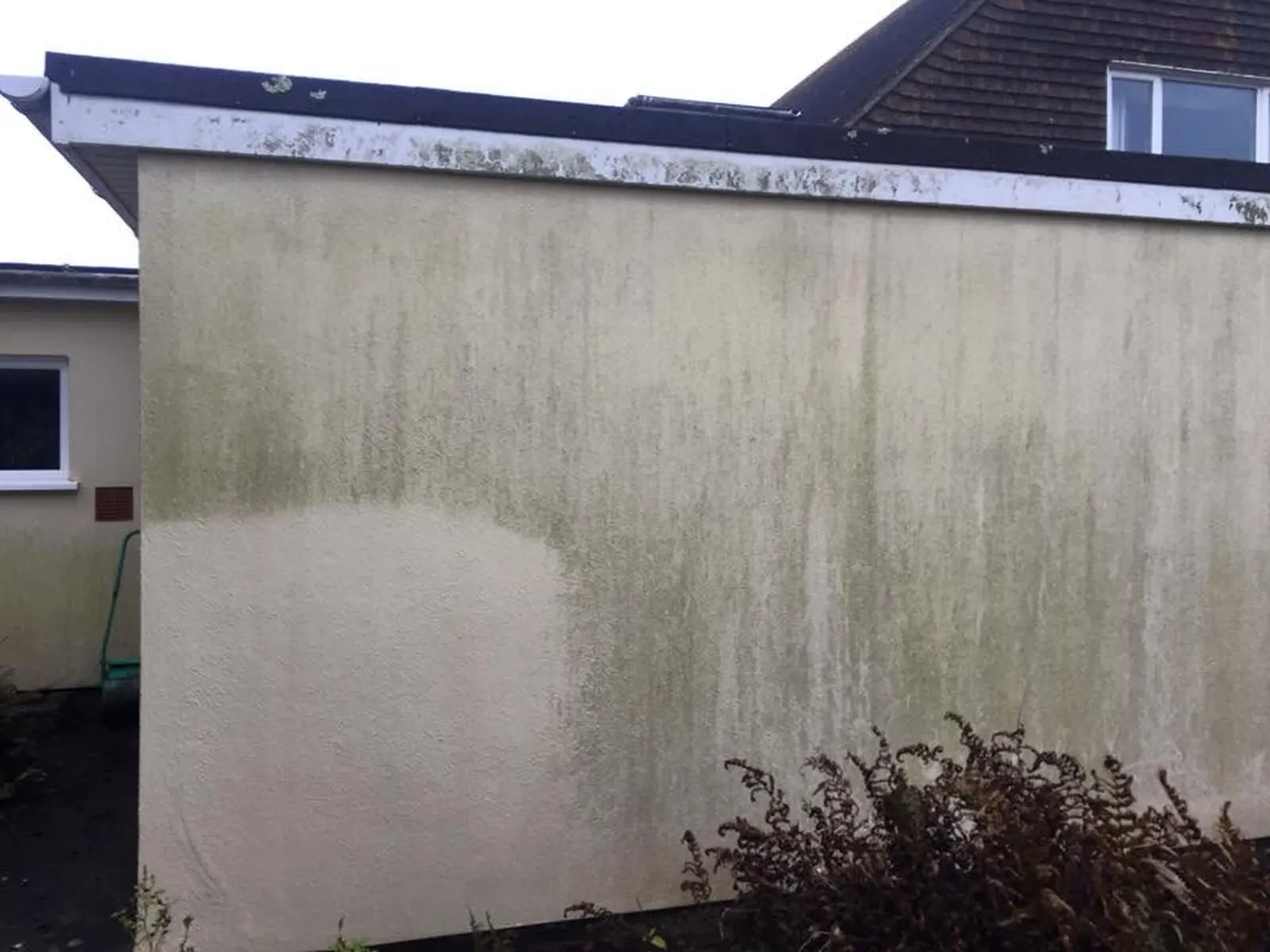
The result
Recovering render beneath leafy garden staining
Reduced green or dark growth can make the original surface more legible, but does not renew the material underneath. Peeling paint, broken render or mismatched repairs may still need decorating or repair work. Cleaning cannot promise a permanently growth-free wall in a sheltered garden.
The point of cleaning a leafy garden elevation is to recover the sound finish beneath removable growth, not to make it behave like an unshaded wall. Around Rattery, continuing shelter can influence future appearance even after a worthwhile clean. Separate the immediate result from the maintenance expectation when discussing the trial. A patch of lifted paint will still require a coating decision, whereas a thin green film on intact material may respond well. Judge the dry surface against those distinctions rather than treating every remaining dark area as the same unfinished task.
Your appointment
Photograph dry render and later growth for comparison
Choose timing with the assessment and complete treatment sequence in mind. Visual improvement can continue gradually following the rinse, so do not assume a fixed waiting period before every remaining mark changes.
A useful maintenance record can be very simple: a dry photograph after treatment, followed by photographs when noticeable growth returns. For Dartington, note whether the same corner or the entire wall changes first. That information supports a targeted review instead of an automatic full repeat clean. If you are considering redecoration, let the dry assessment and proposed coating guidance determine the next date. Ask how the contractor will distinguish ongoing visual change from a mark that needs another look, so you know when to wait and when to make contact.
Before we visit
Identify sensitive features beside the selected wall
Identify plants that are especially delicate and clear movable pots or furniture where practical. Ask about the space needed before undertaking major cutting back, and share any known cracks or leaks.
Make an inventory of sensitive features immediately around the selected wall: water features, vegetable beds, outdoor animal accommodation and valued plants all deserve mention. The contractor can then assess suitable protection and where treatment water may go. In a Rattery garden with a long approach, confirm which gates must remain closed and whether equipment can pass without disturbing planting. Remove only the items agreed. Avoid applying a garden chemical or a domestic cleaner to the render beforehand, since residues and altered staining can make the original surface harder to assess reliably.
Local conditions
Assess drift at wall height beneath foliage
Sheltered walls in leafy Dartington or Rattery gardens can stay damp after a wet spell. More open elevations on the same property may dry differently.
Foliage can shelter a Dartington working area while upper branches move in a stronger breeze, so drift risk should be checked at the application height. A shaded Rattery wall may also remain cool after the garden feels warm. Ask how actual surface conditions and the product's required contact period influence the decision to proceed. Changes to planting might affect future drying, but no particular pruning scheme should be promised to prevent algae. Discuss any garden work separately and judge the cleaned wall's behaviour over time before choosing a routine treatment interval.
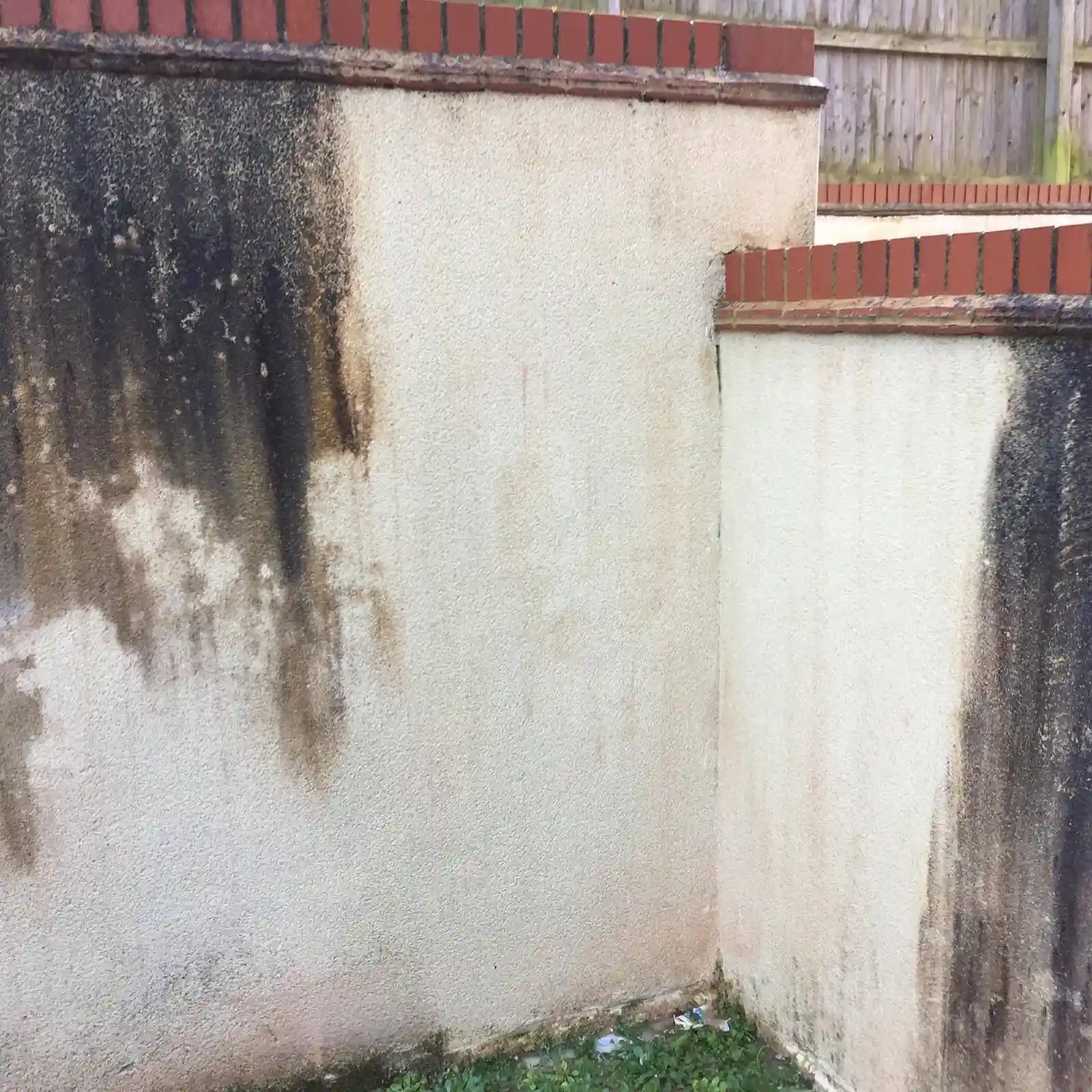
Check your location
Leafy wall-cleaning settings in Dartington and Rattery
Our render-cleaning coverage includes Dartington and Rattery. Mature gardens can shelter walls and slow drying, making views of nearby foliage and the route to each stained elevation particularly useful for assessment.
- Dartington
- Rattery
Common questions
Garden clearance and persistently damp wall corners
Must the garden be stripped back first?+
No blanket clearance is implied; show the planting and discuss the practical working space.
Will treatment solve the reason a corner stays damp?+
No. Cleaning addresses growth, not the building or garden conditions behind persistent moisture.
Google reviews
What SAS customers say
★★★★★ 80+ five-star reviews
★★★★★
“I had a badly stained patio he treated the whole patio and deep cleaned it with hot water and a patio cleaning machine I was very impressed patio looks like brand new 😎”
★★★★★
“A professional, effective, timely, courteous, friendly cleaning service, provided by Simon and his small team.”