

SAS Window Cleaning · Dartington
Roof Cleaning in Dartington
- ✦ 30+ years' experience
- ✦ Fully insured
- ✦ 80+ 5★ reviews
- ✦ Free quotes
Get a free quote
Fast, friendly, no-obligation pricing.
What’s included
Show what falls from the tree-shaded roof
- Review of the roof covering and available working space.
- Controlled hand scraping and brushing for careful moss removal.
- A suitable biocide soft wash applied at low pressure.
- Collection of loosened debris, including clearance of roof gutters.
Differentiate roof moss, twigs and leaf deposits
Roof tiles are never blasted at high pressure. The main growth is removed manually before appropriate treatment, with visible condition guiding the approach. Signs of damage are communicated rather than treated as something a stronger wash will cure.
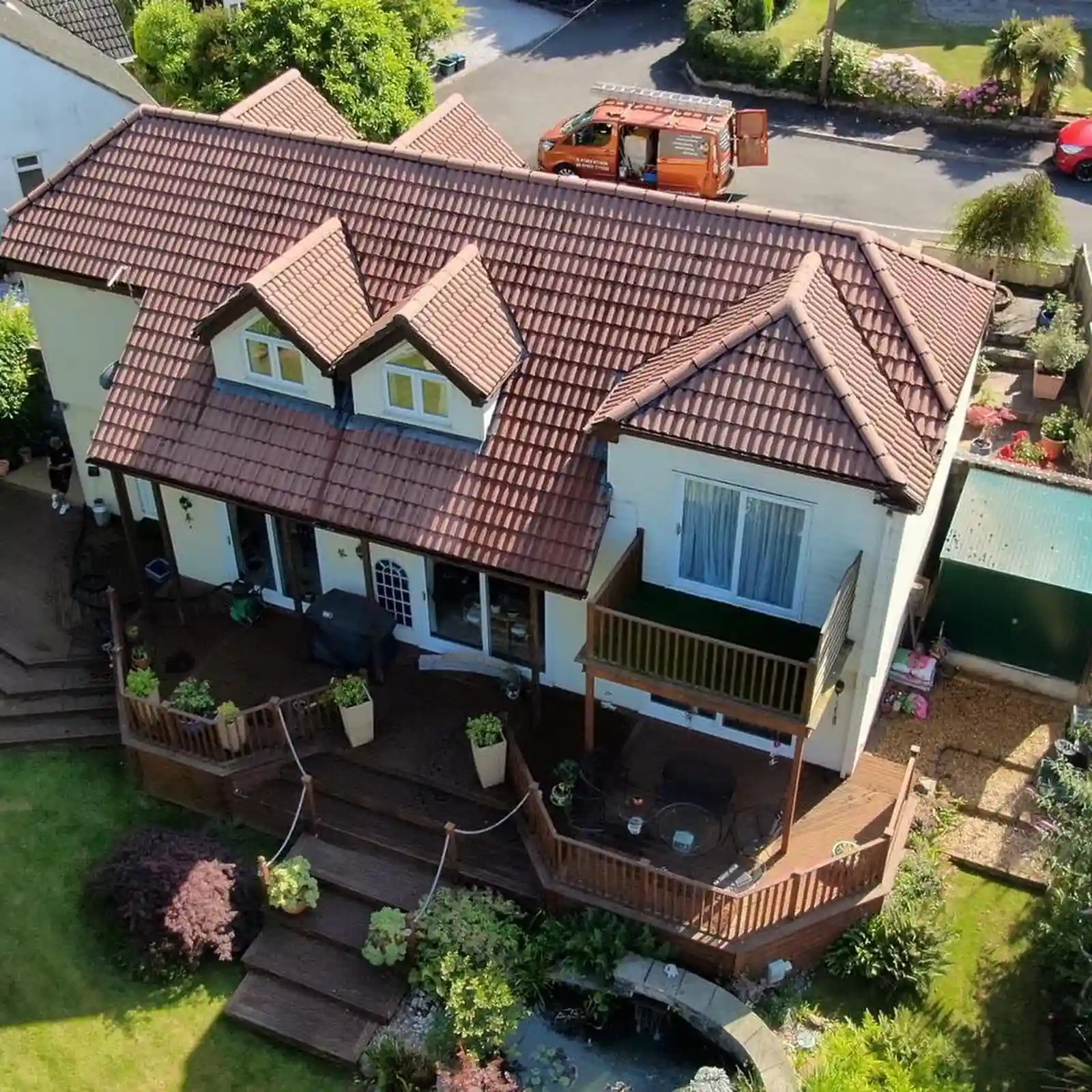
Where branches shade a Dartington roof, the first question is what material needs removing and from which surfaces. Attached moss, loose twigs and leaf deposits do not all call for the same action. Ask how the covering will be assessed before tools or treatment are selected, especially where older and newer sections meet. A suitable low-pressure method depends on material condition and control of the work. It cannot make fragile tiles robust, and suspected damage should be referred for roofing attention rather than hidden beneath a more ambitious clean.
The result
Less roof debris over frequently used outdoor areas
Cleaning aims to reduce accumulated moss and treat residual growth. Removing the bulk does not change the leafy setting around the roof. Remaining organic marks may respond progressively, while weathering persists; future maintenance depends on what actually recurs.
Reducing substantial moss can be worthwhile when roof debris keeps entering gutters or dropping onto a frequently used patio. That benefit should be separated from the purely visual wish for brighter tiles. Mature planting near a Dartington or Rattery home may keep one slope shaded, but it does not prove that growth has caused structural damage. A clean can reveal the covering more clearly while leaving permanent weathering visible. Continued leaf fall also remains a separate maintenance consideration, so removing moss does not eliminate every reason to check the rainwater system afterwards.
Your appointment
Schedule assessment around observed accumulation, not trees alone
A visit is scheduled once access is understood and remains dependent on safe conditions. Roof cleaning does not include repairing leaks.
Schedule maintenance to address an observed issue rather than simply the presence of trees. Recurrent moss deposits, leaf accumulation at a particular edge or visible gutter overflow can each start a useful discussion, though overflow is not a diagnosis in itself. Known roof defects need appropriate repair planning first. After cleaning, ask when a ground-level review would be meaningful and whether a later gutter check is advisable after leaf fall. Different sources of debris may need different attention, without automatically repeating treatment across the whole roof every time material appears below it.
Before we visit
Show planting in relation to the eaves
Take safe ground-level views showing nearby trees and access beneath them. Do not climb for overhead images. Point out valuable planting and any known roofing concerns before the work area is decided.
Photograph trees and planting in relation to the eaves from a stable ground position. This helps explain both shade and the protection needed below, without asking anyone to climb for evidence. Mark fragile plants, pond edges, outdoor sockets and any connected water butt in the enquiry. Agree coverings and treatment runoff precautions before the visit; improvised sheets can obstruct the very route needed for safe work. Discuss gates and animals too, particularly if the equipment route passes through a part of the garden that normally remains securely closed.
Local conditions
Damp ground can sit below a windy canopy
Damp leaves underfoot can affect equipment access after rain. Treatment also depends on wind allowing a controlled application.
A leafy setting can remain damp underfoot while an exposed roof catches wind above the canopy. For Dartington and Rattery properties, both conditions can affect whether the proposed method is workable. Recent rainfall also matters if paths are covered in wet leaves. Ask how the team will decide whether application can be controlled and whether the selected product needs a dry interval. Flexibility over dates is useful, but a change in weather should not lead to abandoning agreed protection for valuable planting or rushing the collection of loosened debris.
Check your location
Roof assessment among mature Dartington and Rattery gardens
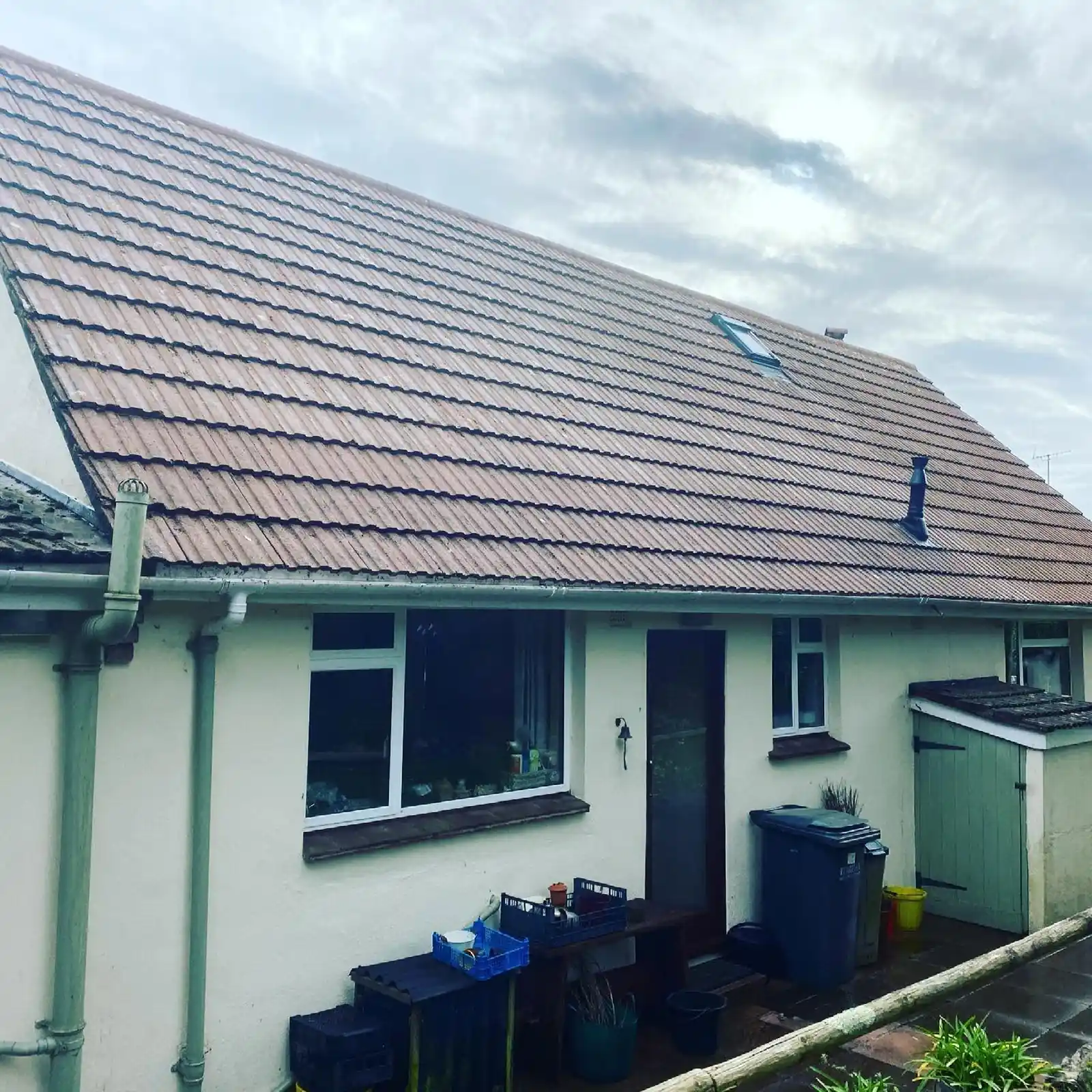
Our roof-cleaning service covers Dartington and Rattery. Mature gardens can influence both growth and access, making views of the approach and the spaces beneath affected roof slopes important before agreeing work.
- Dartington
- Rattery
Common questions
Future leaf fall and planting beneath the roof
Will the treatment stop leaves collecting again?+
No; it addresses organic growth on the roof, not future leaf fall from surrounding trees.
Should planting beneath the eaves be identified?+
Yes; explain its position so the working space and debris collection can be considered before arrival.
Google reviews
What SAS customers say
★★★★★ 80+ five-star reviews
★★★★★
“I had a badly stained patio he treated the whole patio and deep cleaned it with hot water and a patio cleaning machine I was very impressed patio looks like brand new 😎”
★★★★★
“A professional, effective, timely, courteous, friendly cleaning service, provided by Simon and his small team.”